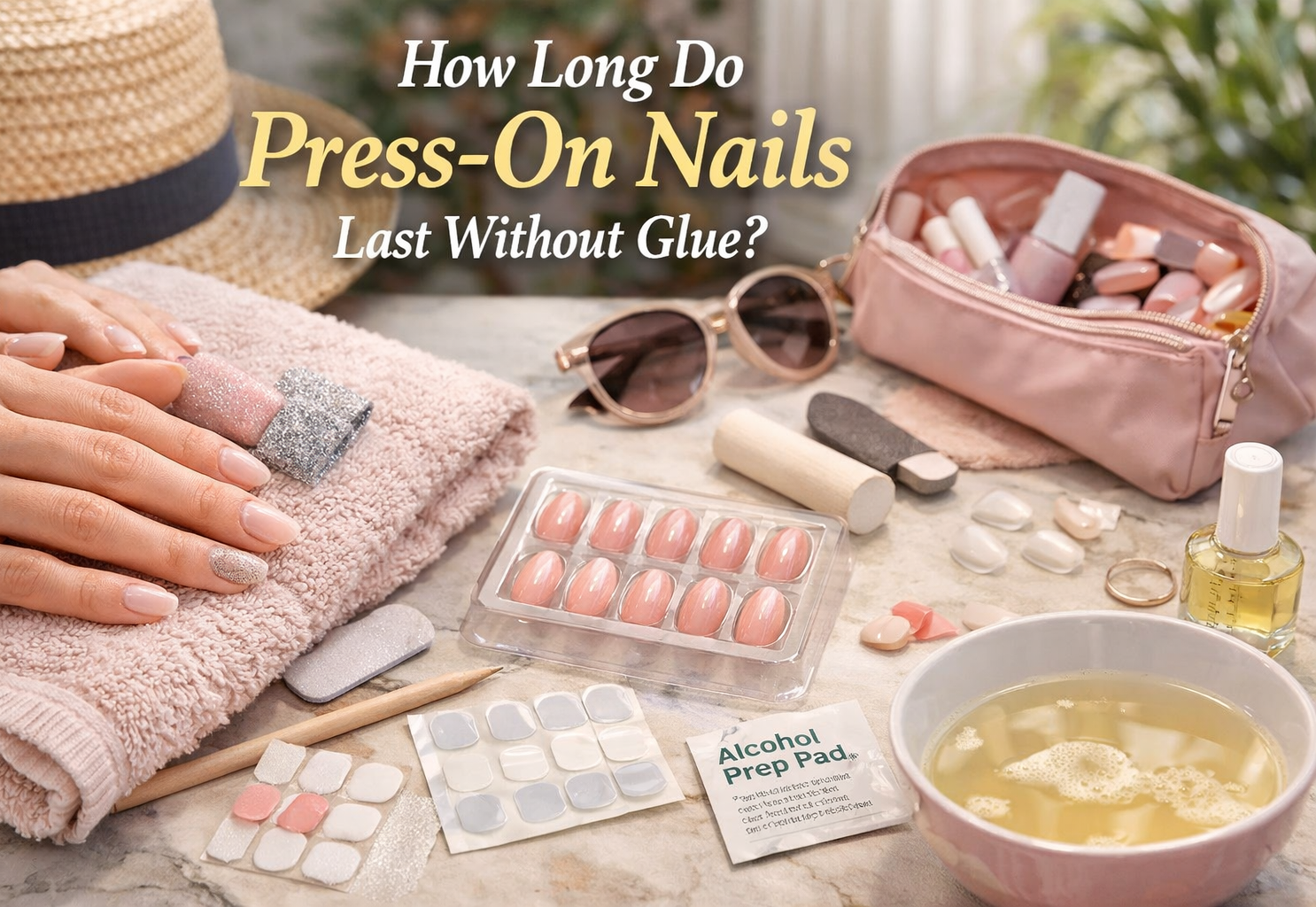
If you love the look of a fresh manicure but hate the commitment of nail glue, you’re not alone. “No-glue” press-on nails are popular for a reason: they’re quick, beginner-friendly, and easy to remove, making them perfect for a weekend trip, a special event, or just testing a new shape without risking damage.
But here’s the honest trade-off: press-on nails without glue don’t usually last as long as glue-applied sets. And if you go in expecting two full weeks, you’ll probably end up frustrated when one pops off at the worst possible moment.
So, how long do press-on nails last without glue in real life? Let’s break down the typical wear time, what actually affects it, and how to squeeze the longest hold possible out of adhesive tabs or pre-applied sticky nails without turning your hands into a DIY science experiment.
What “press-on nails without glue” actually means
When people say “no-glue press-ons,” they’re usually talking about one of these two options:
Adhesive tabs
These are separate sticky tabs you apply to your natural nail, then press the nail tip on top. Tabs are the most flexible option because you can choose different sizes and replace a tab mid-wear if needed. They’re also a go-to for anyone who wants a clean, quick removal.
Pre-applied adhesive
These come with adhesive already on the underside of the nail. They’re fast and convenient, but you have less control over the adhesive coverage. If your nail bed shape doesn’t match the press-on’s adhesive area, you may get earlier lifting.
Both methods count as “without glue,” and both can look incredibly natural, especially when you choose the right size and shape. The difference is mainly about how long they stay secure and how much you can customize the fit.
How long do press-on nails last without glue?
Most people get 1 to 5 days from press-on nails without glue, depending on the adhesive type, nail prep, and lifestyle. With very careful prep and gentle hand use, some people can stretch no-glue wear closer to a week, but that’s the exception, not the rule.
Here’s a realistic range you can use to set expectations:
| No-glue method | Typical wear time | Best for |
|---|---|---|
| Adhesive tabs | 1–2 days | Events, photos, short-term wear, easy removal |
| Pre-applied adhesive | 3–5 days | Long weekends, travel, low-maintenance manicures |
| No-glue (best-case with great prep + careful habits) | Up to ~7 days | Light hand use, minimal water exposure, shorter nails |
If you’re comparing this to glue: glue-applied press-ons often last 7–14 days (sometimes longer), because glue fills tiny surface gaps and creates a stronger bond. No-glue options rely more on surface contact and pressure, so they’re naturally more sensitive to water, oil, and lifting at the edges.
The upside is just as important, because if you want a manicure you can remove quickly without soaking and scraping, no-glue press-ons are one of the easiest ways to get salon-level style with minimal commitment.
Why no-glue press-ons pop off early and what’s really going on
When a no-glue press-on “randomly” pops off, it usually isn’t random. It’s typically one of these issues:
Natural nail oils even if your nails look clean.
Your nail plate produces oils that can weaken adhesive. Lotions, cuticle oils, sunscreen, and even some hand soaps can speed this up.
Water exposure.
Long showers, dishwashing, swimming, and frequent handwashing; water can slowly seep into tiny edges and loosen the adhesive. If you’re aiming for 3–5 days, water management matters more than most people think.
Cuticle contact and skin overlap.
If the press-on is sitting on cuticle skin instead of the nail plate, it has a built-in “lift point.” That tiny edge catches on hair, clothes, and everything else, then off it goes.
Wrong sizing.
A nail that’s slightly too wide can press into the sidewalls and lift. Too small can leave gaps where water and oil sneak in. The “right” size usually sits flush from side to side without touching skin.
Longer shapes + real life don’t always mix.
The longer the nail, the more leverage you create. If you type a lot, work with your hands, open packages, or handle kids’ hair, long no-glue nails will usually loosen faster than short ones.
If you’ve tried no-glue press-ons once and decided they “don’t work,” don’t write them off yet. Many people get dramatically better wear time simply by changing prep and choosing a shorter style for tab wear.
How to make press-on nails last longer without glue
If you want the longest hold possible from adhesive tabs or pre-applied sticky nails, your goal is simple: maximize clean contact between the adhesive and your nail plate, then protect the edges from water and friction.
Prep matters more than the adhesive
You don’t need a complicated routine, but you do need a consistent one. If you want your no-glue press-ons to last beyond a day, consider treating prep as non-negotiable.
In practice, a strong no-glue application looks like this:
- Start with completely clean nails. Remove old product, then wash and dry hands thoroughly.
- Push back cuticles gently. You’re making room for the press-on to sit on the nail rather than the skin.
- Lightly buff the shine off your nail plate. You’re not thinning your nails; you’re removing slickness so adhesive can grip.
- Dehydrate the nail surface. An alcohol wipe or a dedicated prep pad helps remove oils and residue.
- Size carefully before you stick anything down. When in doubt between two sizes, many people get a better seal with the slightly smaller option, as long as it still covers the nail plate comfortably.
- Apply firm pressure for longer than you think. Press from cuticle area to free edge, holding steady.
If you want an easy upgrade, keep a small “prep trio” on hand: a buffer, alcohol wipes, and a cuticle pusher. It’s a small investment that often turns “popped off in hours” into “still going strong on day three.”
Tab placement tricks that change everything
Adhesive tabs can perform surprisingly well if they’re placed well.
Match the tab size to your nail bed, not the press-on.
You want the tab to sit flat on your nail plate with minimal overhang. Overhanging tab edges collect lint and start lifting.
Warmth helps adhesion.
Before pressing the nail on, warm your hands slightly even just by rubbing them together. Adhesives bond better when they’re not cold and stiff.
Press and seal the perimeter.
After you press the nail on, run a firm thumb press around the edges. Some people use a wooden cuticle stick to gently “roll” pressure around the sidewalls for a tighter seal.
Avoid water right after application.
Give your nails time to settle. If you can, apply no-glue press-ons at night so they can set while you’re not using your hands. Even a few hours without water can noticeably improve wear time.
Aftercare that protects your wear time
No-glue nails last longer when you treat them like jewelry, not tools.
Use your knuckles or the sides of your fingers to open cans, unbuckle bags, and peel stickers. Wear gloves for dishes or cleaning if you want your nails to make it past day two. And if you moisturize often, try to keep lotion and oils off the underside and cuticle edge of the press-ons, because oil is one of the fastest ways to loosen adhesive.
Shorter nails are your best friend for no-glue wear. If you want a longer look, consider choosing a medium length but wearing them for a shorter window like an event weekend so you get the style without the constant worry.
What to do when a nail lifts or pops off
This is where no-glue press-ons really shine: you can recover quickly.
If a nail feels loose, don’t ignore it. A wobbly nail tends to catch, bend, and come off at the worst time, and moisture can get trapped underneath, which you don’t want.
Instead, remove it, clean the underside, and reapply with a fresh tab. Many regular press-on wearers keep two or three spare tabs in their wallet or bag for exactly this reason. It’s a small “just in case” habit that saves you from the stress of an uneven set in public.
If you’re using pre-applied adhesive nails and one pops off early, that’s often a sign the adhesive didn’t match your nail plate well. In that case, you might explore sets that include separate tabs or sets designed to be used with either method, so you can customize the hold without switching to glue.
Removing no-glue press-ons safely and how to reuse them
One of the biggest benefits of press-on nails without glue is removal, if you do it gently.
Avoid the temptation to rip them off. Even with tabs, pulling forcefully can take thin layers of your natural nail with it, leaving your nails rough and weak. That damage can also make your next application last less time, which is a frustrating cycle.
Instead, loosen them patiently. Warm water helps, and a bit of oil around the edges can reduce resistance. Once the edge starts to lift, ease the nail off slowly rather than prying straight up.
If you want to reuse the press-ons, remove leftover adhesive from the underside carefully so the nail stays smooth and sits flush next time. Store them in a clean, dry container so they don’t warp.
Many people love no-glue press-ons specifically because they can rotate styles more often (a different look for workdays, weekends, and events) without the long removal process that glue can require. If that sounds like your vibe, it’s worth choosing sets that feel sturdy enough to handle multiple wears.
When no-glue press-ons are the right choice and when they aren’t
No-glue press-on nails are ideal when you want:
- A fast, low-commitment manicure for a weekend or event
- Easy removal without soaking or scraping
- A glue-free option due to sensitivity, preference, or simplicity
- A “trial run” of a shape or length before committing to longer wear
They’re not always the best choice if you:
- Work with your hands (healthcare, food service, childcare, cleaning, trades)
- Need consistent 7–14 day wear without touch-ups
- Wash your hands extremely frequently or do lots of water-heavy tasks
A practical approach many readers end up loving is keeping both options available: tabs for short wear (photos, travel, special occasions) and glue for times when you want your nails to last through a full workweek. You don’t have to pick one forever,you can match the method to your schedule.
Conclusion
Press-on nails without glue typically last 1–5 days, depending on whether you use adhesive tabs (often 1–2 days) or pre-applied adhesive nails (often 3–5 days), with careful prep sometimes extending wear closer to a week. The biggest factors are nail prep, correct sizing, firm pressure during application, and protecting the edges from water and oil. If you want your no-glue press-ons to last longer, focus on removing shine with light buffing, dehydrating with alcohol wipes, applying at night when possible, and choosing shorter shapes for everyday life. And if a nail loosens, fixing it quickly with a fresh tab is the easiest way to keep your set looking polished and intentional.