
If you’ve ever sat in a salon staring at a shape chart of options like almond, oval, square, coffin, and stiletto, wondering which one will actually flatter your hands. Nail shape quietly decides whether your fingers look slim or stubby, whether your manicure lasts for weeks or chips after a day, and whether your everyday tasks feel easy or high‑maintenance. Pick the right one, and everything from French tips to minimalist nudes looks instantly more polished.
This guide removes the guesswork. You’ll learn how to assess your hands in 60 seconds, match shapes to your anatomy and lifestyle, and file at home without damage. Along the way, you’ll get pro tips that reduce breakage and make any shape look intentional rather than accidental. Consider keeping this open for your next appointment so you can communicate clearly and leave with a mani that truly suits you.
Why nail shape matters more than you think
Nail shape changes the visual proportions of your hands. Rounded and tapered edges create the illusion of length; blunt corners can make nails look wider. Shape also affects durability. Sharp corners concentrate stress and chip sooner; softly rounded edges disperse force so polish lasts longer. Finally, your shape choice signals style: round and squoval whisper “clean and classic,” while almond and coffin read modern and fashion‑forward.
If you’ve been choosing based on trends alone, you might be missing out on a shape that’s easier to maintain, suits your work and hobbies, and actually flatters your specific finger and nail bed proportions. Don’t miss the benefits of picking a shape that does all three.
Start with your anatomy: a 60‑second assessment
Stand near a window or bright mirror and look closely at your natural nails with polish removed.
- Finger proportions: Are your fingers shorter or longer relative to your palm? Shorter fingers benefit from elongating shapes like round, oval, or almond. Longer fingers can carry bolder, squarer silhouettes.
- Nail bed width: If your nail plates look wide, choose shapes that narrow visually, such as round, oval, almond, or squoval. Narrow beds can handle square or coffin.
- Cuticle line: Trace the curve at the base of your nail. As a rule of thumb, echoing this natural curve at the tip looks most harmonious.
- Natural growth: Some nails flare or tilt slightly. Working with your natural growth pattern usually means fewer chips and less upkeep.
- Nail strength: If your nails peel or break easily, avoid extreme points or long, sharp corners unless you plan to reinforce with gel or acrylic.
Snip a piece of clear tape the size of your nail, draw a tip line in the shape you’re considering, stick it on, and step back. It’s a fast preview before you commit.
A quick‑match cheat sheet
- Short fingers or wide nail beds: Round, oval, almond, or squoval to elongate and slim.
- Long fingers or narrow nail beds: Square, squoval, coffin; almond also works for a softer look.
- Low‑maintenance lifestyles: Round or squoval at or just beyond the fingertip.
- Love bold nail art or length: Almond, coffin/ballerina, or stiletto with reinforcement.
If you’re undecided, start with squoval. It’s universally flattering and easy to maintain; many readers use it as a baseline before trying almond or oval.
Deep dive: popular nail shapes and who they flatter
Round
Round tips mirror your fingertip’s natural curve, instantly softening wide nail beds and subtly lengthening short fingers. Because there are no sharp corners, round nails are the least likely to chip.
Best for: Shorter fingers, wide nail beds, anyone who types a lot or works with their hands.
Length & maintenance: Keep the free edge short to just beyond the fingertip. This shape looks clean even as it grows out, making it ideal between salon visits.
How to file: Keep the sidewalls straight, then arc the file in one direction to round the tip. Avoid “sawing” back and forth; it frays the keratin layers.
Want a low‑risk refresh? Ask for a short, softly rounded shape with a sheer nude polish for an effortless, office-friendly look.
Oval
Oval narrows the sides slightly and extends the tip into an egg‑like curve, which elongates fingers and refines wide nail beds without a sharp point.
Best for: Most hands, especially small hands or shorter fingers seeking lengthening.
Length & maintenance: Works best when there’s a few millimeters of free edge. Because the corners are softened, it wears well on natural nails.
How to file: Shape as you would round, then accentuate the curve by tapering the sides very slightly toward the centerline.
If you’re moving from round to something dressier, request “short oval.” It’s a subtle yet noticeable upgrade.
Squoval
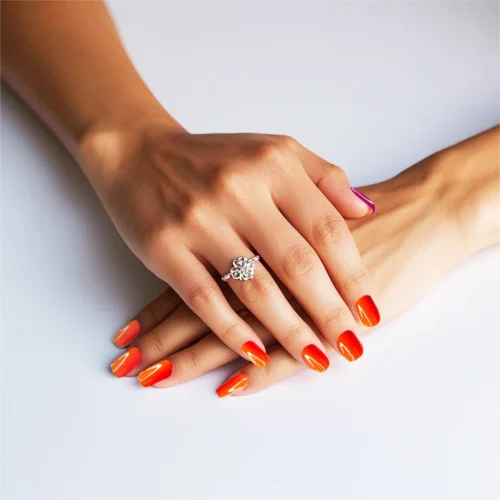
A square outline with gently rounded corners, squoval suits nearly everyone by balancing width and length. It keeps the strength of straight sidewalls without the chip‑prone sharp corners of a true square.
Best for: Any finger type, especially if you want something natural‑looking and durable.
Length & maintenance: Keep at or just beyond the fingertip for the most universally flattering look. Minimal upkeep; easy to reshape at home.
How to file: File straight across, then soften corners in a single long stroke to connect the edges smoothly.
Not sure what to choose? Start with squoval for two appointments, then adjust longer or more tapered once you see how it wears.
Square
Parallel sides and a straight free edge give a sharp, architectural look, especially chic on long, narrow nail beds. The horizontal line can make short or wide nails appear wider, so it’s best when your fingers are already long.
Best for: Long fingers with narrow nail beds, French tips, and crisp, graphic nail art.
Length & maintenance: Short square is practical; long square makes a statement but can chip at the corners if nails are thin.
How to file: Keep the sidewalls perfectly straight; file straight across to a blunt edge. Seal the edge with a top coat “cap” to prevent splitting.
If you love French tips, try a short square or short squoval for a classic, low-fuss look.
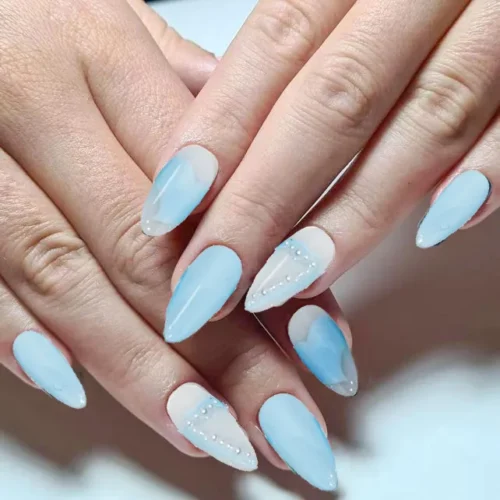
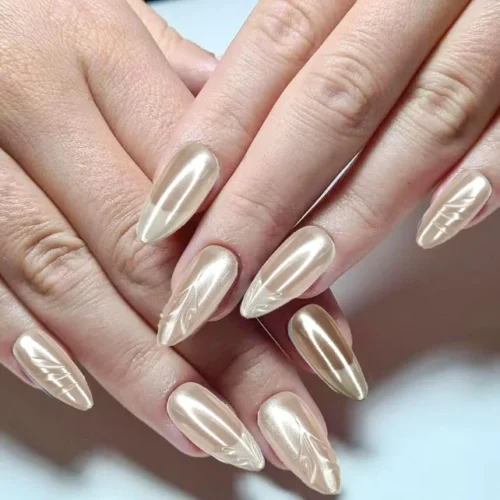
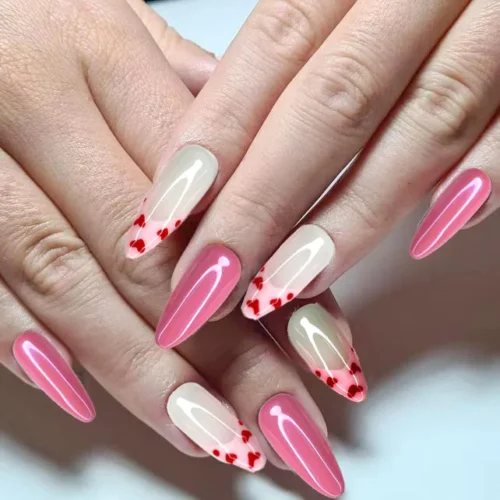
Almond
Slim sides and a softly pointed peak draw the eye upward, creating one of the most elongating silhouettes. It slims wide nail beds and flatters shorter fingers.
Best for: Those who want length and elegance without a dramatic point; excellent canvas for gradient or chrome finishes.
Length & maintenance: Needs a bit more length and structure. For fragile nails, consider a builder gel overlay or short almond to maintain strength.
How to file: Taper both sides evenly toward a rounded peak. View your hands palm‑up to check symmetry.
Thinking about nail art? A short‑to‑medium almond gives you room for designs while staying wearable.
Coffin/Ballerina
Tapered sides with a squared‑off tip create an edgy, modern profile—like a ballerina pointe shoe. The flat tip balances length visually, so designs look expansive without the extreme point of stiletto.
Best for: Long, strong nails or enhancements; slim fingers; statement manicures.
Length & maintenance: Higher maintenance on natural nails due to stress at the corners; most people choose gel, acrylic, or soft gel extensions for longevity.
How to file: Taper the sidewalls in straight lines toward the center, then square off the tip. Ensure the tip is perfectly level for that polished “boxed” look.
If you crave “Insta‑worthy” nails but work at a keyboard, ask for a medium coffin with softened corners for fewer snags.
Stiletto
A dramatic, elongated point that transforms the hand’s silhouette and makes fingers look extra long. It’s more fashion than functional, but stunning for events or photo‑ready looks.
Best for: Long fingers or anyone seeking high‑impact style; best with reinforcement.
Length & maintenance: Fragile on natural nails; opt for professional enhancements and be mindful of daily tasks.
How to file: Taper both sides steeply to a centered point. Keep the point slightly rounded to reduce snags without dulling the drama.
Want the vibe without the upkeep? Try “soft stiletto” for a wearable compromise.
Lipstick
A diagonal, slanted tip that mimics a lipstick bullet. The asymmetry tricks the eye and can make fingers appear longer and more stylized.
Best for: Short or long nails when you want something unique; works surprisingly well on petite hands.
Length & maintenance: Moderate maintenance; edges must be smooth to avoid catching.
How to file: Shape a square or squoval first, then angle the free edge diagonally in one clean line. Perfect the sidewalls to keep the angle crisp.
Curious but cautious? Start with a subtle slant on one accent nail before going all‑in.
Match your nail shape to your lifestyle
Your manicure should fit your real life. If you lift weights, open packages, play an instrument, or chase toddlers, short round or squoval will save you time and chips. Office professionals often prefer short oval or almond for a polished, feminine look that won’t fight the keyboard. If you treat manicures as part of your style statement and enjoy regular salon visits, almond or coffin offers maximum design space.
Many readers choose a “weekday shape” and switch to a longer almond or coffin for vacations and events. You can rotate shapes through the year without damaging your nails if you file gently and avoid extreme length changes in a single session.
At‑home shaping that won’t damage your nails
Great shape starts with the right tools and a gentle technique. A 180–240 grit file or a glass/crystal file is ideal for natural nails. Skip harsh metal files. Work on dry, clean nails and push back cuticles gently to reveal your true nail outline.
- File in one direction, lifting between strokes. Back‑and‑forth sawing frays the keratin layers and invites peeling.
- Keep sidewalls straight before rounding or tapering the tip. Strong sidewalls are your shape’s “scaffolding.”
- Check symmetry by flipping your hands palm‑up and viewing the tips from underneath; it’s easier to spot leaning or uneven taper.
- “Cap” the free edge with a thin swipe of top coat after polishing. This seals micro‑layers and slows chipping.
- Finish with cuticle oil daily. Hydrated nails flex instead of snapping, extending the life of every shape.
If you’re moving toward a new silhouette, transition over two appointments. Gradual tapering preserves strength and reduces breakage.
If you love length: natural nails vs. reinforcement
Longer shapes such as almond, coffin, and stiletto look best when they have structure. Natural nails can manage short to medium lengths if they’re healthy, but if your nails peel or split, consider a protective overlay. Options include builder gel overlays or extensions that add a subtle apex for strength and resist daily wear. You’ll gain length without living in fear of a snag snapping your point.
If you prefer to stay all‑natural, choose short almond or oval and keep edges meticulously sealed with top coat. Many people find they can enjoy the look of a tapered shape at a shorter length when upkeep is consistent.
Nail art compatibility by shape
Classic French tips shine on square and squoval, while micro‑French and skinny French flatter oval and almond. Negative‑space and minimalist line work elongate any tapered shape. Wide horizontal designs emphasize width on short squares but look balanced on coffin. If you love bold chrome or cat‑eye effects, almond and coffin offer the most visual real estate without overwhelming smaller hands.
Consider trying a design that emphasizes vertical lines, like center stripes, V-tips, and elongated ovals, if you want to lengthen the look of short fingers. Subtle choices like a nude base with a skinny vertical accent can have a big impact.
Troubleshooting: common shape problems and quick fixes
If your corners keep chipping, you may be wearing a true square with corners too sharp for your daily routine. Round them slightly into squoval and cap the edges with top coat. If your nails flare as they grow, check whether you’re filing at an outward angle; bring sidewalls straight down before shaping the tip. If almond keeps snapping, shorten by 1–2 mm and strengthen with a lightweight overlay or switch to a short oval for a cycle.
When nails peel at the free edge, look at your filing motion and your hydration. Replace rough files regularly, file in one direction, and commit to cuticle oil. A weekly restorative base coat can help bind layers and reduce future peeling.
Communicating with your nail tech
Bring photos of the shape and length you like, but also describe your lifestyle: “I type all day,” “I lift at the gym,” or “I want this to last through a beach trip.” Ask your tech to show you your nails from the underside to verify symmetry before polishing. If you’re nervous about going too long, request a “conservative first pass,” then add length in small increments. Many people find that trying a short almond or squoval first builds confidence for bolder shapes later.
You might also ask for a shape that echoes your cuticle arc. When the curve at the base and the tip match, nails look intentional and balanced, even in simple shades.
Conclusion
Choose your nail shape based on your anatomy, including finger length, nail bed width, and cuticle curve, as well as your daily life. Round and squoval are the most forgiving and durable; oval and almond elegantly elongate; square is sharp and chic on long, narrow beds; coffin and stiletto are high‑impact but higher‑maintenance. File with a gentle, single‑direction motion, keep sidewalls straight, soften chip‑prone corners, and seal the edge with top coat. If you love length or bold silhouettes, consider professional reinforcement to keep tips strong. When in doubt, begin with squoval or short oval, then evolve toward almond or coffin as your comfort and nail strength allow.
You don’t need a trend chart to decide; you need a shape that flatters your hands, fits your life, and lasts. Take a minute to do the 60‑second assessment, pick the style that checks your boxes, and bring this guide to your next appointment. Prefer to DIY? Start with squoval or short oval, follow the gentle filing tips above, and notice how much longer your polish lasts. Many readers discover their “signature shape” within two manis, and yours is waiting. Consider trying it and enjoy how confident your hands look every time they’re in view.