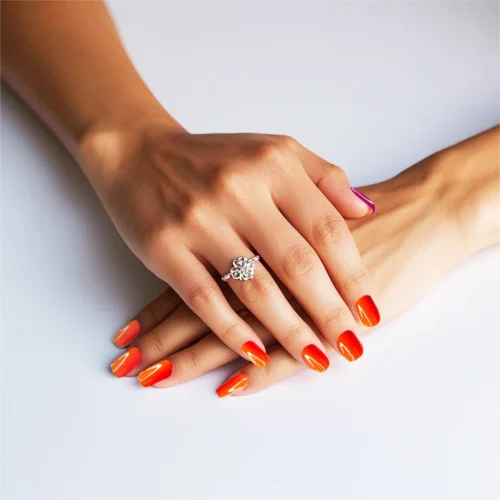

If your press-ons look amazing on day one but start lifting by day three, you don’t have a “you” problem, but you have a chemistry and technique problem. The right adhesive, paired with the right prep, can keep press-on nails locked in through showers, typing, workouts, and weekend trips. This guide cuts through the hype and explains exactly which nail glues last the longest, why they work, and how to apply them so you actually get salon-level longevity at home.
You’ll also find gentle, non-pushy pointers on what to buy and how to use it, so you can stop guessing, stop re-gluing, and start enjoying a flawless set that really lasts.
Quick answer: what actually lasts the longest?
- Overall longest hold: UV/LED-cured resin “gel” glues (including solid or semi-solid gel adhesives). When paired with properly fitted full-coverage tips or press-ons, they commonly outlast traditional glues think 10 to 21 days because they cure into a flexible, gap-filling cushion that resists water and lifting. They do require a lamp and slightly more technique.
- Longest non-UV option: Medium-to-thick viscosity ethyl cyanoacrylate (ECA) brush-on nail glue. With good prep and a careful press-and-hold, you can expect 7 to 14 days of wear. Brush-on formats let you paint a thin, even layer that prevents air pockets and gives a stronger bond than drippy squeeze tubes.
- Shortest wear (but gentlest removal): Adhesive tabs or pre-glued press-ons. Great for events or a long weekend, usually 1 to 3 days. You can extend to 4–5 days by pairing tabs with a tiny dot of glue at the apex, but tabs still won’t beat gel or ECA for true longevity.
If you want pure staying power above all else, consider a lamp-cured gel adhesive. If you want strong results with less equipment, pick a brush-on ECA glue labeled “medium” or “thick” viscosity and follow the technique below.
Why some nail glues last longer than others
Longevity comes down to how an adhesive fills microscopic gaps, how it handles moisture, and how much control you have during application.
- Cyanoacrylates (traditional nail glues): These polymerize with moisture on the nail, creating a hard, fast bond. A slightly thicker ECA formula fills small gaps better than runny versions, reducing air pockets (a top cause of early lifting).
- UV/LED-cured resin “gel” glues: These cure on command under light, forming a flexible but durable layer that hugs the nail plate and the underside of your press-on. That flexibility helps absorb impacts and daily water exposure. Solid or semi-solid versions are especially good at staying put where you place them.
- Viscosity matters: Thin, watery glues set fast but can leave gaps or seep into cuticles. Medium-to-thick glues buy you a few extra seconds of positioning and create a stronger, gap-free seal. That seal more than raw “stickiness” is what resists lifting.
- Applicator control: Brush-on bottles let you paint a perfectly thin coat. Pen tips and squeeze tubes can flood the cuticle area, which weakens the seal once cured and can irritate skin. For most people, brush-on wins for consistency and longevity.
How to choose the right nail glue for your lifestyle
- Two-week vacations, weddings, or you’re rough on your hands: A UV/LED-cured gel or solid adhesive offers the best chance at 10–21 days with minimal lifts. It’s also more forgiving of tiny fit issues thanks to its cushiony, gap-filling texture.
- Strong hold, no lamp: A brush-on ECA nail glue in medium-to-thick viscosity is the sweet spot for 7–14 days. Prioritize even coverage from cuticle to free edge without flooding.
- Sensitive nails or frequent style changes: Adhesive tabs are the gentlest. For a little extra security, add a micro-dot of glue at the nail’s apex before placing the tabbed press-on.
- Occasional wear or emergency fixes: A fast-set, precision-tip ECA is handy for single-nail repairs and quick re-attachments on the go.
How to make press-on nails last longer
Most “my nails popped off” stories start with oils or cuticle overhang, not bad glue. Here’s a quick prep that dramatically improves hold:
- Fit first: Size every press-on before you touch adhesive. Each should fit sidewall-to-sidewall with zero overlap onto skin. File a press-on’s side gently if it’s a hair too wide. A perfect fit prevents corner lift.
- Push back don’t cut cuticles: Use a soft pusher to clear the nail plate. Any cuticle film left behind is like Teflon to glue.
- Shape and gently buff: Shorten your natural free edge so the press-on can seal all the way to the tip. Lightly buff the surface to remove shine; you’re creating the faintest “tooth,” not thinning your nail.
- Dehydrate: Wipe each nail with 100% acetone or isopropyl alcohol. Let them air-dry completely. Oils are the enemy of a long-lasting bond.
- Stay dry: Plan to keep hands dry 2–3 hours post-application. Bedtime is perfect apply last in your routine.
Application that locks in a seamless seal
The most durable bond is thin, even, and air-bubble-free.
For brush-on cyanoacrylate:
- Paint a whisper-thin coat on your natural nail and a very thin coat on the underside of the press-on, especially around the apex. Thin-on-thin bonds outlast a thick glob.
- Angle and tuck: Slide the press-on in at a slight angle so its cuticle edge nestles just shy of your cuticle line.
- Press and hold: Apply firm, even pressure for 45–60 seconds. Rock gently side-to-side to expel micro-bubbles.
For UV/LED gel or solid adhesives:
- Place a pea- to grain-of-rice–sized amount on the press-on’s underside, then seat it from cuticle to tip so the gel spreads to the edges without flooding.
- “Flash cure” each nail for 10–15 seconds to freeze placement, then fully cure according to the product’s instructions.
- Check the perimeter: If any gel squeezed out to skin, wipe it before the full cure.
Common mistake to avoid: Pressing too hard initially. That can squeeze out too much adhesive, leaving a starved bond that lifts days later.
Press-on nail aftercare to prevent lifting
- Keep them dry for a couple of hours after application. Water exposure too soon can shock-cure cyanoacrylate into a brittle bond or undermine a fresh gel seal.
- Wear gloves for dishwashing and cleaning. Hot water plus detergents is the fastest route to lifting.
- Oil your skin, not your seams. Cuticle oil is great, just keep it off the glue perimeter in the first 24 hours.
- File, don’t peel. If an edge feels sharp or catches hair, lightly bevel the press-on’s free edge instead of picking at it.
Store a mini file and a tiny glue in your bag. Many readers find one quick edge touch-up extends wear by several days.
Why press-on nails pop off & how to fix it
- Corner lift on day 3–5: Dehydrate the area with alcohol, add a micro-dot of glue under the corner, press 30–45 seconds. For gel adhesives, gently lift just enough to tuck in a sliver of gel, flash cure, then fully cure.
- Glue flooding the cuticle: You’re using too much or a glue that’s too thin. Switch to brush-on, wipe the brush before each nail, and keep the first stroke 1–2 mm away from the cuticle before nudging closer on the second pass.
- Nails popping off whole: Fit is the likely culprit. File the press-on sidewalls or go down a size. Re-prep with acetone, then reapply with a slightly thicker glue.
- Oily nail beds: Add a pH bonder/dehydrator after alcohol. Avoid lotions the day you apply.
How to remove press-on nails safely without damage
- Never use hardware-store super glue. While many contain cyanoacrylates, they’re not formulated for skin or nails and can include irritants.
- Avoid cotton with fresh cyanoacrylate. It can cause a heat reaction. Use lint-free pads instead.
- If you feel heat with gel adhesives, you applied too much product at once. Thin it out and flash cure in short bursts.
- Removal for ECA glues: Soak nails in warm, soapy water to start, then work cuticle oil around the perimeter and gently lift with a wooden stick. Stubborn bonds can be eased with a non-acetone remover formulated for press-ons. Patience prevents peeling your natural nail layers.
- Removal for gel adhesives: File the shine from the top surface, oil the perimeter, and use a soak-off approach per product directions. Don’t pry. If you’re not sure, take a break and try again later as time plus oil is kinder than force.
What to look for on the label (shop smarter, not harder)
- For non-UV longest hold: “Ethyl cyanoacrylate,” “brush-on,” and “medium” or “thick” viscosity. Bonus points for “clog-resistant” packaging so the cap actually reopens next time.
- For maximum overall longevity: “UV/LED gel adhesive,” “solid/semi-solid gel,” and instructions specifying cure times with a lamp. Look for wording about “full-coverage tips” or “press-on application.”
- For sensitive users: Fragrance-free, and avoid formulas with added formaldehyde resins. Patch-test before a full set.
FAQs that save you time and money
- Glue or adhesive tabs—what lasts longer? Glue. Tabs are gentler and faster, but even with a helper dot of glue, they rarely match a full glue bond for 2+ weeks of wear.
- Brush-on vs. squeeze tube? Brush-on wins for control and even coverage, which means fewer air pockets and longer wear.
- Can I stack extra glue for longer hold? More isn’t better. Thin, even coverage on both surfaces creates the strongest, least-brittle bond.
- How long should I hold each nail? A true 45–60 seconds for ECA glues. For gel adhesives, press firmly while you flash-cure so the shape sets without gaps.
- Do short or long press-ons last longer? Short to medium lengths last longer in daily life, which aligns with expert advice on how long press-on nails last, because they snag less. If you love long nails, a gel adhesive’s flexibility helps prevent traumatic pop-offs.
A 5-minute summary you can act on now
For the longest-lasting press-on nails, a UV/LED-cured gel or solid adhesive is the durability champion, often holding 10–21 days when paired with well-fitted tips and a lamp cure. If you prefer no-lamp simplicity, choose a brush-on, medium-to-thick ethyl cyanoacrylate glue; with meticulous prep (push back cuticles, light buff, acetone wipe) and a 45–60 second press per nail, 7–14 days is realistic. Keep hands dry for a couple of hours after application, wear gloves for hot-water chores, and carry a mini file plus glue for quick corner fixes. Thin, even layers beat thick blobs; perfect sizing beats squeezing harder; and patient, oil-assisted removal protects your natural nails so every future set looks better than the last.
Ready for a set that actually lasts?
- If you own a lamp, try a gel or solid adhesive on your next full set for true two-week wear.
- If you don’t, upgrade to a brush-on, medium-viscosity ECA glue and follow the prep-and-press routine above.
- Keep a tiny repair kit in your bag so a quick dot-and-press saves a lifting corner in seconds.
Take ten focused minutes now, and enjoy the next two weeks without a single nail drama. Your future self snag-free and photo-ready will thank you.