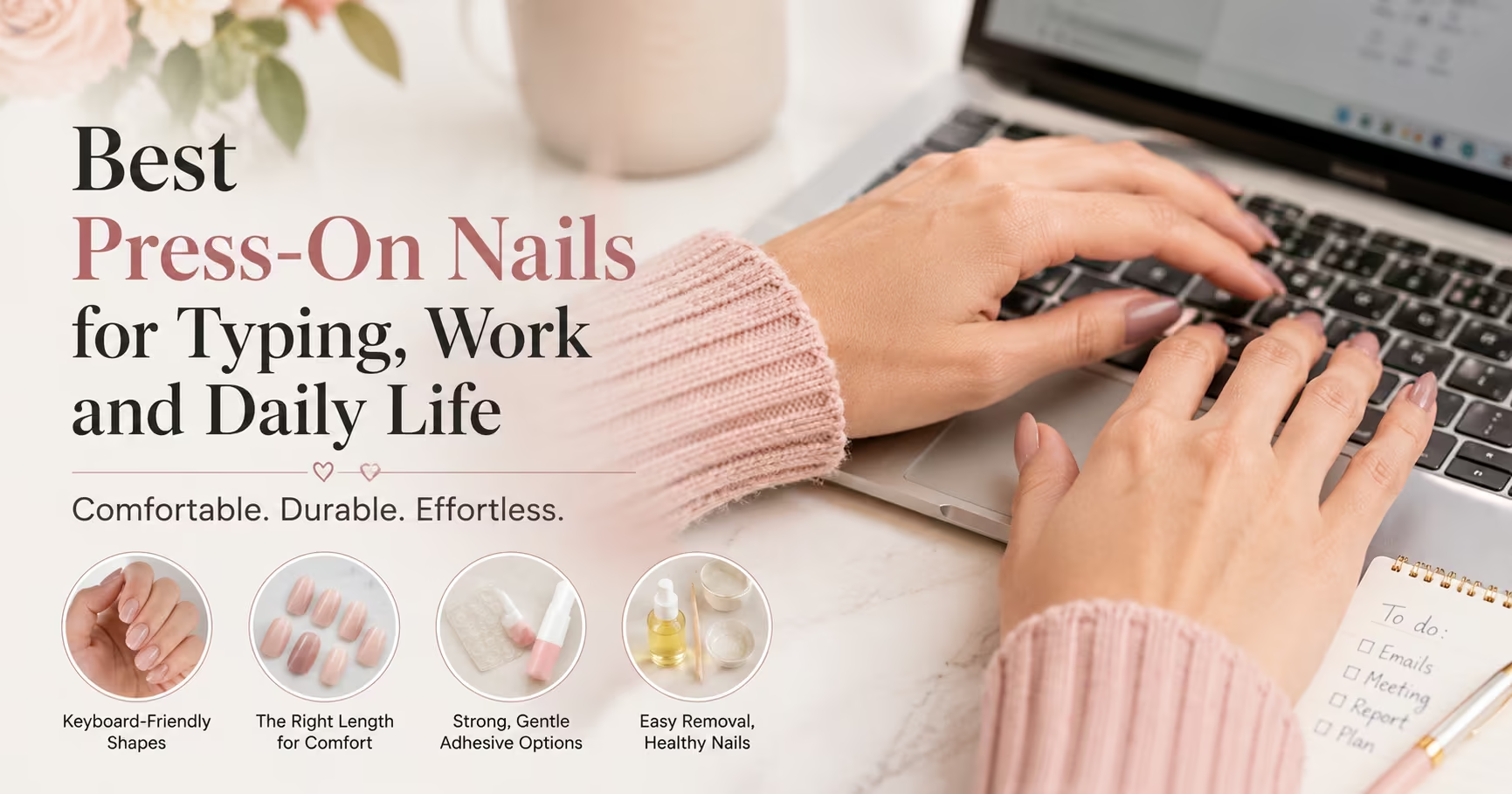
If you love a polished manicure but spend hours typing, texting, or juggling busy days, press-on nails can feel like a gamble. Too long and you mistype every other word. Too thick and opening a soda can hurts. Too flimsy and one pops off right before a meeting. This guide solves those pain points with work-friendly shapes, lengths, and application tips that keep your nails secure through emails, errands, and everything in between without sacrificing style or your natural nail health.
You’ll learn which shapes are genuinely “keyboard-proof,” how to choose a length that won’t slow you down, the right adhesive strategy for your routine, small tweaks that make typing effortless, and removal techniques that protect your nails so you can reuse sets and save money. By the end, you’ll know exactly what to buy and how to wear it confidently from Monday standups to Saturday brunch.
What Makes a Press-On “Work-Friendly”
A good everyday set isn’t just pretty; it’s built for movement and repetitive tasks. Four elements matter most:
- Fit that hugs your sidewalls and cuticle line without pinching. A close fit prevents snagging on hair, sweaters, and keyboard edges.
- Balanced thickness. You want a thin cuticle area that blends with your nail, a reinforced stress point in the center, and a thinner free edge so keys and zippers don’t feel cumbersome.
- Practical length. For heavy typing the free edge should extend just a little beyond your fingertip so your finger pads not the nail tips hit the keys.
- Reliable adhesive strategy. Choose glue, tabs, or a combo based on how long you need them to last and how gentle you want removal to be.
Consider trying one simple experiment before buying: tap your bare nails lightly on a table. Where does your fingertip naturally land? The best press-on length lets you keep that same contact point once the nails are on.
The Most Comfortable Shapes for Typing and Office Work
Shape affects how your nails meet the keys. The goal is to reduce accidental key presses and keep edges from catching on a laptop deck, notebooks, or fabric.
- Short almond: A softly tapered tip that visually lengthens fingers without adding bulk. The rounded point helps slide over keys and trackpads with minimal resistance.
- Squoval (soft square): Straight sides with a rounded, gentle corner. It’s clean and professional, excellent for fast typers who want maximum control and minimal snagging.
- Oval: Universally flattering and smooth at every angle. This shape is forgiving if you’re new to press-ons or switching shapes for the office.
If you love bold styles like coffin/ballerina or stiletto, choose shortened versions. A shorter length in those shapes offers the vibe you want but remains functional at a keyboard. Consider reserving dramatic, longer shapes for evenings or weekends when you’re typing less.
How Long Should Work-Friendly Press-Ons Be?
Length is the biggest predictor of day-to-day comfort. Use this quick rule of thumb: measure how far the press-on extends beyond your fingertip.
- 0–2 mm past the fingertip: Best for heavy typers, data entry, and coders; feels almost like your natural nails with a polished finish.
- 2–4 mm past the fingertip: Balanced everyday length; still very workable if you write, type, and handle paperwork.
- 5+ mm past the fingertip: Great for events and photos, but you’ll likely need typing adjustments and more frequent maintenance.
If you’re unsure, start short. You can always size up next time. Many readers find that moving from 4–5 mm to 2–3 mm instantly reduces typos and fatigue.
Best Adhesive Options for Work and Daily Wear
Your choice of adhesive determines both staying power and removal experience.
- Nail glue: Longest hold for busy weeks, frequent handwashing, or workouts. Look for a thin, fast-setting formula to avoid bulk. For all-week wear, consider this your default.
- Adhesive tabs: Gentle on natural nails and perfect for temporary wear photo days interviews or weekends. Tabs can feel cushioned, which some find more comfortable, but they’re more likely to lift after repeated washing or lotion use.
- Hybrid method: A small dot of glue at the cuticle area plus a tab toward the free edge. This combo can increase comfort and help prevent water from seeping under the tip while keeping removal fairly easy.
If you’re not sure which is right, try tabs for your first daytime test at work. If you love the look and function, switch to glue for your next, longer wear.
Office-Proof Application Routine for Secure Wear
Good prep is the difference between a one-day manicure and a 7–10 day set. Here’s a streamlined routine that balances speed, comfort, and hold:
- Dry, clean nails: Wash hands, then swipe each nail with an alcohol pad to remove oils. Skip heavy hand creams for a few hours before and after application.
- Gentle shaping: File your natural nails to a smooth edge and lightly buff the surface to remove shine. Push back cuticles so the press-on sits flat; don’t cut living tissue.
- Size and pre-shape: Match every finger and pre-file the sides of press-ons if needed. A perfect sidewall hug prevents catching on hair and fabrics.
- Glue strategy: Apply a thin, even coat to your natural nail, plus a small dot inside the press-on at the center. Press on at a 45-degree angle from cuticle to tip to avoid air pockets. Hold 20–30 seconds with firm, even pressure.
- Set time: Avoid water, steam, or vigorous tasks for at least one hour. If you can, apply in the evening so the bond fully cures overnight.
Typing Comfort: Tiny Tweaks That Make a Big Difference
- Lower your keyboard angle so wrists are neutral. A flat keyboard or negative tilt reduces the chance of your nail tips striking first.
- Float your wrists. Let your finger pads, not nail tips, land on the keys. With short almond or squoval shapes, this becomes second nature within a day.
- Trim if you’re clacking. If you hear persistent tapping from nail tips, you’re probably overreaching. File 1–2 mm and retest. Most people type faster after this tiny adjustment.
- Try a quick at-home test. Put on one hand’s press-ons, draft five minutes of emails, then switch. It’s easier to feel the difference and choose the best length for you.
Finishes and Colors That Read Professional on Camera and In-Person
In offices and on video calls, finishes matter. Sheer nudes, soft pinks, milk tea neutrals, and micro-French tips look polished without drawing focus from your work. Satin or glossy topcoats read clean on camera; soft chrome accents or a single statement nail add personality without overwhelming.
If your workplace is formal keep art subtle think fine lines micro-glitter at the tips or tonal gradients. For creative fields, try bolder designs in shorter lengths so impact remains high and function stays intact.
If you rotate between formal and casual settings, build a small capsule: one short almond neutral, one soft square French, and one playful design in a shorter length for Fridays or events.
Longevity Habits That Protect Your Natural Nails
Press-ons should never cost you nail health. Preserve your nails and your set by forming a few light touch habits:
- Oil after handwashing, not before. Cuticle oil keeps the surrounding skin supple, but apply it at least an hour after gluing so bonds aren’t weakened.
- Use tools, not nails. Open cans with a spoon end, peel stickers with a card edge, and lift tabs with a key. You’ll extend wear by days.
- Pat dry, don’t soak. Repeated, prolonged soaking softens adhesive. Pat after washing; wear gloves for chores if you’re aiming for long wear.
- File, don’t rip. If an edge lifts, file the underside gently and re-glue. Pulling can separate layers of your natural nail.
Fast Removal and Reuse Without Damage
When it’s time to switch styles, patience pays off:
- Start with warm, soapy water. Soak 10–15 minutes to soften adhesive, then gently wiggle at the sides. If it resists, soak longer.
- Oil glide method. Slide a wooden cuticle stick along the sidewall and drip a little cuticle oil into the gap; work slowly from side to center. Avoid metal tools that can gouge your nail plate.
- Clean-up. Remove residual glue with a buffer, wash, then rehydrate with cuticle oil and a light nail-strengthening treatment. Avoid immediate reapplication; give your nails a few hours to breathe if possible.
If you plan to reuse your set, clean the underside with isopropyl alcohol, lightly buff off old adhesive, and return the nails to their tray labeled by finger. Your next application will be faster and neater.
How to Reuse Press-On Nails and Lower Cost per Wear
A well-cared-for set can be re-worn several times, especially shorter shapes that experience fewer stress bends. Treat press-ons like accessories:
- Track sizes that fit each finger once; jot them on the box lid.
- Keep a “spares” envelope for duplicates and a couple of universal accent nails.
- Store everything dry and away from heat so curvature and finish stay intact.
Over time, a capsule of three to five versatile sets such as neutral short almond, soft square French, a sheer oval, a minimalist chrome accent set, and a fun statement design covers weekday professionalism and weekend play while keeping costs low.
Best Press-On Nail Choices by Work Style
- Heavy typist or data entry: Short almond or squoval, 0–2 mm beyond fingertip, thin glue layer. Choose satin or glossy neutrals to hide micro-scuffs.
- Lots of handwashing or healthcare: Squoval short length with glue. Keep a mini oil for post-shift hydration and apply only after a full cure window.
- Client-facing presentations: Oval or short almond with micro-French or sheer milky shades; they look elegant on camera and in bright lighting.
- Creative roles or events: Short coffin or short stiletto for trend-forward shape without typing drag. Add chrome accents or minimalist art.
- Sensitive natural nails: Tabs for day events or hybrid method for gentler removal. Keep lengths at or under 2–3 mm past the fingertip.
You can absolutely mix and match. Many readers land on short almond for weekdays and switch to a slightly longer soft square for weekends.
Common Mistakes That Make Work Press-Ons Less Practical
- Choosing by color first. Fit and shape matter more. Nail down your best size and silhouette; then buy colors within that framework.
- Skipping prep. Oils kill hold. A 30-second alcohol swipe and light buff add days of wear.
- Over-gluing. More glue doesn’t mean more strength; it means more mess and lift. Thin, even layers bond best.
- Ignoring sidewalls. If a nail is too wide, it will catch. File the sides before application for a custom hug.
- Rushing water exposure. Give your set at least an hour ideally overnight before showers workouts or washing dishes.
2-Minute Typing Fit Test Before a Full Set
Before you commit to a full week, test performance:
- Apply press-ons to your non-dominant hand only.
- Type a short email draft and a paragraph of numbers/symbols.
- Note any mis-hits or snagging. If tips are striking first, shorten 1–2 mm and round the corners slightly.
- When it feels effortless, finish your dominant hand to match.
This micro-test saves you from living with an uncomfortable length for days.
Final Takeaway: Work-Friendly Press-Ons Should Feel Effortless
The best press-on nails for typing, work, and daily life share the same DNA: a snug fit, balanced thickness, and a short, rounded shape that lets your finger pads contact the keys. Start with short almond, squoval, or oval at 0–2 mm past your fingertip, apply with a thin layer of fast-drying glue, and give the bond an hour to cure before water or workouts. Keep a tiny desk kit for quick fixes use tools instead of nails for prying and remove with patience warm soapy water and cuticle oil to protect your natural nails so you can reuse sets and stretch your budget. Do a quick one-hand typing test to fine-tune length, then build a mini capsule of neutrals and one playful set to cover your week seamlessly.