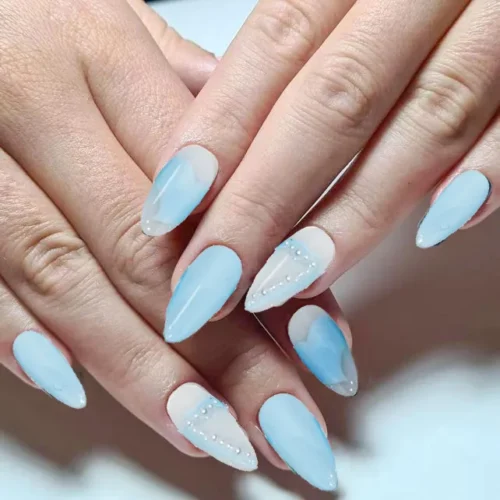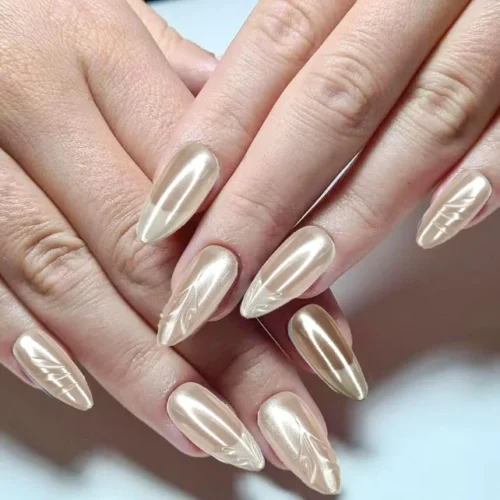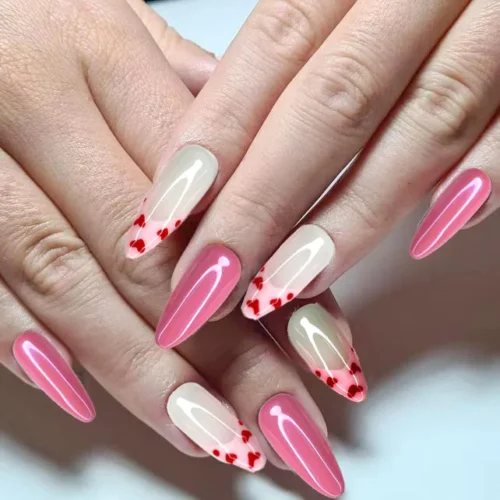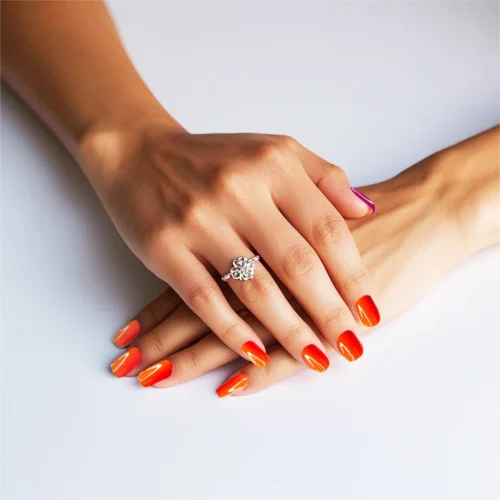
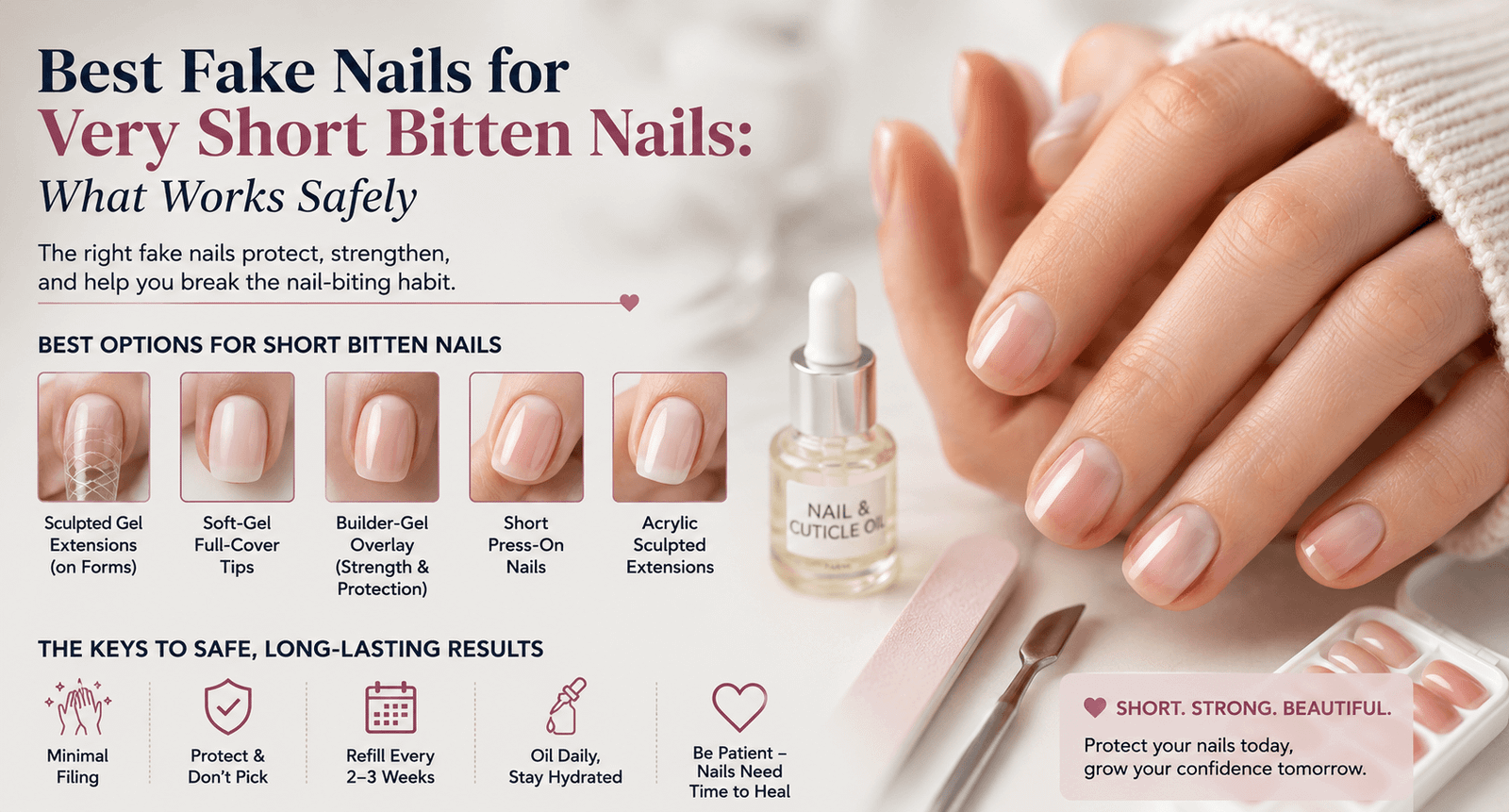
If you’re hiding your hands because your nails are bitten down, the best fake nails for very short bitten nails can help you protect them while they grow. The right “fake nails” do not just look pretty. They can act like a protective splint that shields sore skin, reduces the urge to bite, and gives your natural nails time to recover.
Quick answer: The best fake nails for very short bitten nails are short sculpted gel extensions, soft-gel full-cover tips, builder-gel overlays, or short press-on nails. Choose short, rounded shapes, avoid harsh filing, remove them gently, and keep refills every 2–3 weeks to protect nail growth.
This guide breaks down the safest, most convincing fake nails for nail biters, how to make them last, and the exact steps that help re-train a biting habit without spending every weekend at the salon.
What Very Short Bitten Nails Need Before Fake Nails
Bitten nails have different priorities than healthy, long nail beds. To choose enhancements that actually work, look for:
- Adhesion that doesn’t rely on free edge. Many tips require a lip of natural nail to grip. You want systems that adhere to the nail plate itself or can be sculpted from scratch.
- A protective, slightly flexible “helmet.” Too-rigid products can snap; too-soft can peel and invite picking. Balanced strength with a gentle apex is ideal.
- Short, realistic lengths. Starting long increases leverage on the nail, lifting, and the temptation to fiddle. Short enhancements win the long game.
- Minimal filing and safe removal. Overfiling and prying cause most damage not the product itself. Prioritize techniques that respect the natural nail.
- A fill/refill plan. Nail-biting recovery happens over 6–10 weeks. Your enhancement should adapt as your own nails grow.
Keep those in mind as you weigh the options below.
The Best Types of Fake Nails for Very Short Bitten Nails
Here’s how each option performs specifically on tiny, bitten nail beds with strengths, trade-offs, and who it’s for.
Sculpted gel extensions on forms
A nail pro uses forms under your short nail, then builds the extension with builder or hard gel without a plastic tip needed. Because the structure is created to match your nail’s curve, it adheres even with little to no free edge.
Why it’s great for biters:
- Custom shape and thickness mean fewer rough edges to pick at.
- Gel’s gentle flexibility helps prevent painful breaks.
- Minimal filing if applied by an experienced tech.
Consider if:
- Your nails are extremely short or the skin under the free edge is tender and exposed.
- You can commit to salon maintenance every 2–3 weeks.
Wear time: Typically 2–4 weeks between refills. Removal is by careful filing down, ask to keep a thin protective layer until you’re fully grown out.
Soft‑gel full‑cover tips
These are pre‑shaped gel tips bonded to the entire nail plate with gel, then cured. Many techs successfully apply them to nails with barely any free edge.
Why it’s great for biters:
- Fast, uniform, ultra‑natural look in short lengths.
- Soak‑off removal when used with true soft‑gel systems.
Consider if:
- You want a cleaner grow‑out and easier removal than some sculpted systems.
- You’ll keep lengths short to reduce leverage and lifting.
Wear time: 2–3 weeks. Removal is a gentle file‑down plus soak in remover, or conversion to a refill if the system allows.
Press‑on nails with glue or tabs
Modern press-ons are thinner at the cuticle, come in petite sizes, and can look convincingly salon-done, especially when you choose short press-on nails that match tiny nail beds. On very short nails, they’re often the cheapest, fastest way to stop biting now.
Why it’s great for biters:
- Instant barrier. If you can’t feel an edge, you’re less tempted to bite.
- Short, natural shapes exist; you can trim and reshape before application.
- Affordable to replace if you lose one, keeping momentum through slip‑ups.
Consider if:
- You prefer DIY and want the lowest cost per wear.
- You can commit to proper prep and removal to avoid damage.
Wear time: With good prep and glue, 7–10 days is common; adhesive tabs offer 1–3 days and the gentlest removal.
Acrylic sculpted extensions
Acrylic is strong and time‑tested. A skilled tech can sculpt from forms on very short nails.
Why it’s great for biters:
- Highly durable and customizable; excellent when you’re hard on your hands.
Trade‑offs:
- More rigid than gel; if you pick, small lifts can become bigger quickly.
- Requires careful filing and refills, choose a tech known for gentle e-file work.
Wear time: 2–3 weeks between fills. Removal by filing; avoid tearing or prying.
Builder‑gel overlay only
If your goal is healing over length, a builder‑gel or structured base coat overlay reinforces your natural nails as they grow out.
Why it’s great for biters:
- Acts like a clear shield against micro‑trauma and picking.
- Lowest risk of snagging because there’s no extension.
Consider if:
- You’re returning to work that forbids length.
- You want to transition away from enhancements later.
Wear time: 2–3 weeks, then a refill.
Best Nails for Nail Biters
- Severe biting, minimal free edge, and you want the safest start: Book sculpted gel on forms in the shortest length.
- You want salon‑smooth results with easier soak‑off: Ask for soft‑gel full‑cover tips kept very short.
- You need a budget, at‑home fix today: Choose short, round press‑ons with glue, not just tabs.
- You’re extremely rough on your hands: Consider sculpted acrylic kept short and thick at the stress area.
- You want to grow without visible length: Ask for a builder‑gel overlay only.
If you’re unsure, consider trying press‑ons first to test your preferred shape and length before investing in a salon set.
How to Make Press-On Nails Last on Bitten Nails
If you want to know how to make press-ons last on bitten nails, start with prep because press-ons fail on short nails when prep is rushed. This method increases wear time dramatically while keeping your natural nails safe.
- Start with clean, dry nails. Wash hands, then swipe each nail with alcohol. Avoid oils and lotions for a few hours beforehand.
- Tame the skin, don’t hack it. Gently push back the eponychium with a wood stick. Do not cut living skin as any nicks raise infection risk.
- Etch both surfaces. Lightly buff the natural nail until the shine is gone. Also buff the underside of each press‑on where it will touch your nail; this creates tiny grooves for better grip.
- Fit matters more than anything. Choose a size that fits sidewall to sidewall without pressing into skin; if you are unsure, follow this guide on how to measure nails for press-on nails before applying a set. If in doubt, size down and file the sides of the press‑on to match your nail.
- Use a “glue pocket.” Apply a thin, even layer of glue on your nail and a small dot in the press‑on’s center. Approach at a 45‑degree angle from the cuticle, then roll forward to push out air. Hold 30–45 seconds.
- Cap the edge. If your set is paintable, run a whisper of clear top coat across the free edge to reduce water seepage.
- Baby them for two hours. Avoid water, steam, and intense heat immediately after application. This helps glue fully set.
If one lifts later, remove it fully, clean with alcohol, re‑etch, and reapply and don’t just squirt glue into a gap. That traps moisture and can irritate the skin.
Best Length, Shape, and Color for Short Bitten Nails
Short nails can look incredibly chic when the proportions are right.
- Length: Keep total length close to a “short‑short.” On very small beds, even 1–2 millimeters past the fingertip reads polished.
- Shape: Round or soft square reduces corners that catch and invites a natural look. Short almond can work once you’ve stopped picking.
- Apex: Ask for a visible but gentle apex about one‑third from the cuticle. It strengthens the extension without looking bulky.
- Finish: Neutral sheers, soft pinks, classic reds, or delicate micro‑French elongate small nails. Heavy horizontal art can make nails look shorter.
- Fit tricks: Many brands offer “petite” or “narrow” options, but custom press-on nails may be a better choice if your nail beds are especially small or uneven. When in doubt, carefully thin the cuticle edge of a press‑on from the underside for a flush blend.
You might start short and neutral for two weeks, then try a subtle design once the urge to bite calms and don’t miss the confidence boost that comes with each small upgrade.
What to Ask for at the Salon for Bitten Nails
Asking for salon nails for bitten nails can feel intimidating, but walking in with a clear request helps your tech give you the safest result. A clear request helps your tech give you the best, safest result.
- Be upfront: “I bite my nails and want a protective, short enhancement to help me stop.”
- Ask for: Sculpted gel on forms or soft‑gel tips kept very short, with a rounded or squoval shape.
- Emphasize health: “Please keep filing minimal, use an acid‑free primer, and avoid cutting live skin.”
- Set a plan: “I’ll come back in 2–3 weeks for a gentle refill to keep everything short while my nails grow.”
If UV/LED curing concerns you, apply broad‑spectrum sunscreen on your hands 20 minutes before the appointment or wear fingerless UV gloves as a simple precaution.
Safe Removal and Refill Care for Fake Nails
Longer wear and healthier nails come from small daily habits.
- Oil daily. A drop of finger oil morning and night keeps the enhancement flexible and reduces lifting while your natural nails grow.
- Protect your progress. Wear gloves for dishes and cleaning; chemicals and hot water soften glue and gel.
- Carry a mini kit. A press-on nail tool set with a tiny file and a small tube of nail glue can prevent one lifted edge from becoming a picking spiral.
- Schedule proactive refills. Every 2–3 weeks, keep the length short and rebalance the apex. Ignoring grow‑out invites breaks and frustration.
- Remove with patience. For press‑ons, soak in warm soapy water and a little oil, then gently wiggle off and never pry. For soft‑gel tips, thin the surface first, then soak as directed. For hard gel or acrylic, have a professional file to a thin, safe layer; don’t rip.
Ignoring removal guidance can lead to white spots, thin plates, and sensitivity yet easy to avoid with the right technique.
6-Week Nail Biting Recovery Plan with Fake Nails
Week 0–2: Pick your barrier. Choose one of the short enhancements above. Keep edges smooth and distraction‑free. Place a fidget tool where you usually bite such as desk, car, couch.
Week 2–4: Refill, keep it short. Resist the urge to “go longer” too soon. Celebrate wins: photograph your nails weekly to see growth you might miss day to day.
Week 4–6: Lighten the load. If you started with extensions, consider transitioning to a shorter set or a builder‑gel overlay only. This teaches you to live with your nails without training wheels.
Beyond 6 weeks: Maintain what works. Some people keep short overlays for a few months; others switch to regular polish. If you feel the urge returning, re‑apply press‑ons for a week as a reset.
Set calendar reminders for refills and oiling. Consistency, more than product choice, is what turns “former biter” into your new identity.
Safety Red Flags When Using Fake Nails on Bitten Nails
- Inflamed, painful skin or pus around nails? Pause enhancements and see a clinician; you may have an infection that needs care first.
- Itchy, rashy skin after using glue? You may be sensitive to adhesives. Switch to adhesive tabs or consult a professional for alternatives.
- Burning or “rings of fire” after prep? That’s usually overfiling. Request gentler prep or find a new tech.
- Picking at lifts? It’s human. Smooth the edge with a file and either re‑glue promptly or book a repair to avoid a cascade of damage.
Don’t miss the mental side: replace the habit, not just the surface. Keep lips balm’d, occupy hands during stress, and reward yourself for milestones.
Final Takeaway: Best Fake Nails for Nail Biters
Very short, bitten nails rebound fastest when you use a protective enhancement that doesn’t depend on free edge, is kept short and natural, and is applied and removed gently. Sculpted gel on forms and soft‑gel full‑cover tips are top salon choices; modern press‑ons are the best budget‑friendly DIY solution. Prep and fit matter more than brand. Keep edges smooth, oil daily, refill every 2–3 weeks, and transition to lighter overlays as your nails strengthen. Pair the barrier with simple habit swaps, and you’ll protect your progress long enough for real, healthy growth.