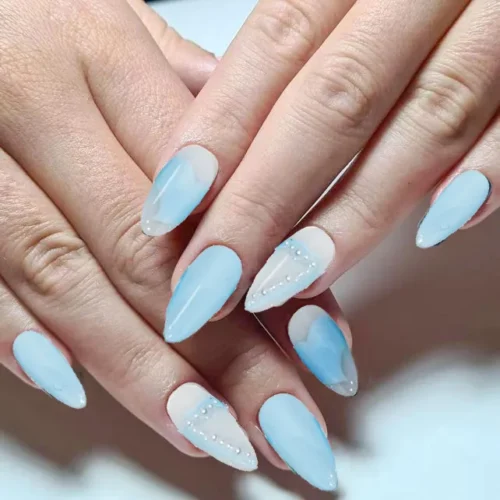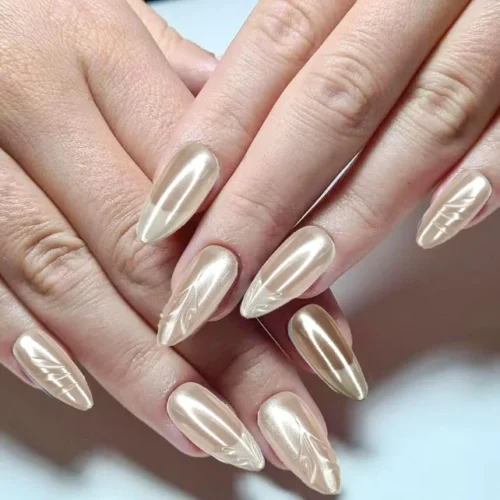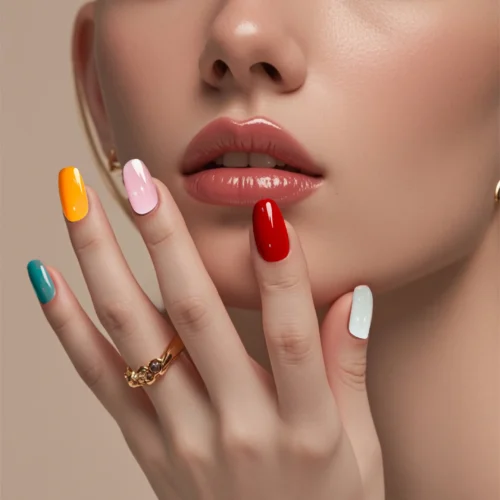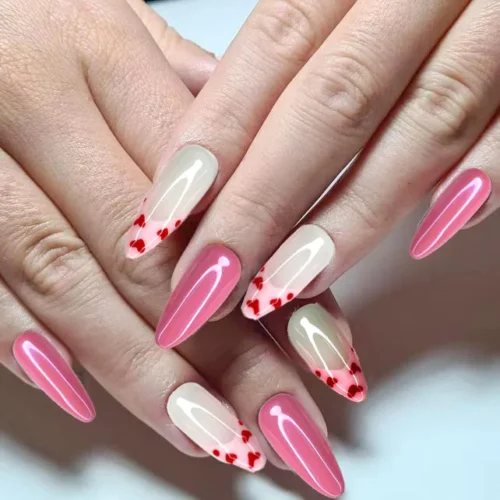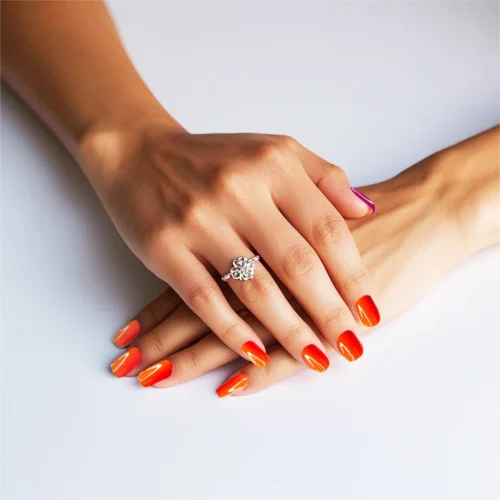

If you’ve ever loved a press-on design but hesitated because your press-on nails look fake, thick, or “stuck on” in daylight, you’re not alone. The good news is that telltale bulk is not inevitable.
With the right prep, fit, and a few pro application habits, natural-looking press-on nails can pass the close-up test even under bright sun or a camera. This guide shows you how to get a seamless cuticle blend, a slim side profile, and a finish that reads like a salon gel set without the appointment.
Quick answer: To make press-on nails look real, choose tips that fit your sidewalls and nail curvature, keep the length proportional, use the thinnest effective adhesive layer, apply at an angle from the cuticle, press out air, lightly blend the cuticle edge, seal with top coat, and finish with cuticle oil.
Why Press-On Nails Look Fake or Bulky
Press-ons look unreal for a handful of predictable reasons: poor fit across the sidewalls, a curve that doesn’t match your nail bed, too much adhesive creating height, or a cuticle edge that sits up instead of melting into your natural nail. Length and shape play a role, too; overly long or sharply squared tips can highlight thickness and make small inconsistencies obvious.
The fix is mostly technique, not magic products. Think of it like tailoring. When the cut is right and the seams are blended, even an affordable set looks luxe.
Choose Natural-Looking Press-On Nails That Fit Your Nail Beds
Realism starts before any glue comes out.
- Size by sidewall, not just length. Place a tip on your bare nail without adhesive and check that it reaches edge‑to‑edge without touching skin. If you’re between sizes, choose the slightly larger tip and file the sidewalls to match your nail plate. A too‑small tip stretches and lifts; a too‑wide one casts shadows that read as bulk.
- Check curvature from the side. Gently press the test tip at the center. If the edges lift, the tip is flatter than your nail. If the center lifts, it’s more curved than your nail. Either can still work, but you’ll need careful adhesive placement. When in doubt, pick the option that sits flattest before glue; a tip that rocks dry will look bulky once applied.
- Pick a realistic length and shape for your hands. Short to medium almond press-on nails or soft square tends to look the most natural and is easier to type, text, and live in. If you love long nails, start a touch shorter than your salon length; added structure in press-ons can amplify thickness visually.
- Remove the manufacturing nub. Most tips have a tiny ridge at the free edge. A few light strokes with a fine file makes the edge smooth and “salon” straight away.
Pro move: Note the tiny size numbers embossed under each tip and record your sizes once. Many readers keep a quick note on their phone so future applications are faster and more consistent.
Prep Your Nails for an Invisible Press-On Seam
Prep is where most “that looks real” compliments are earned. The goal is a clean, slightly textured nail plate and a tidy cuticle area so the tip can sit low and flush.
- Wash and dry your hands. Skip lotion for now.
- Trim or clip free edge short so it doesn’t peek under narrower styles.
- Gently push back cuticles; remove any loose, dry skin from the nail plate. You’re creating space for the press-on to tuck into the line, not cutting living tissue.
- Lightly buff just enough to remove surface shine. Aim for a soft matte, not a thinned nail.
- Dust off thoroughly and swipe each nail with isopropyl alcohol or a nail dehydrator.
If your hands run oily or it’s humid where you live, one extra alcohol pass improves grip and reduces micro‑lifting at the edges.
Consider adding a glass file, a 240/280‑grit buffer, alcohol wipes, and a gentle cuticle pusher to your at‑home kit.
Glue or Tabs? Choose Your Adhesive for The Most Natural Look
Both can look real; the “most natural” choice depends on your priorities.
- For the slimmest profile and best cuticle blend, choose liquid nail glue and use it sparingly.
- For speed, easy removal, and frequent re‑wear, pick adhesive tabs in sizes that stay fully on the nail plate. Tabs are slightly thicker than glue but very even, making them great if your fit is spot-on.
A practical rule: If the cuticle looks bulky, you likely used too much adhesive or didn’t seat the base into the cuticle curve. If the whole nail looks tall, curvature or sizing is usually the issue.
How to Apply Press-On Nails So They Look Real
Work one hand at a time and leave both thumbs for last. Lay out your pre‑sized tips in order so you can move smoothly.
- Apply the thinnest effective layer. For glue, place a tiny bead on your natural nail and a whisper‑thin smear in the center underside of the tip. Too much glue oozes and creates a ridge; too little can trap air.
- Angle into the cuticle, then roll down. Set the tip at a slight angle so the base nestles into the cuticle line first. Roll the tip down toward the free edge to push air outward instead of trapping it.
- Press with intent: center first, then sidewalls. Hold firm, even pressure for 30–40 seconds. Then pinch the sidewalls gently so they seat flat and don’t cast shadows.
- Clean as you go. If any glue escapes, wipe it immediately with a dry lint‑free cloth or the edge of an alcohol wipe. Avoid flooding with remover, which can dull the surface.
- Repeat consistently. Consistent pressure time on each nail results in consistent height across the set, which reads “pro.”
Pro tip for sheer or French designs: Angle‑and‑roll is critical. Air pockets are more visible under translucent bases and along a smile line.
How to Blend the Cuticle Edge Without Bulk
Even perfect application can leave a faint step at the base. Softly tapering that edge is the secret to an imperceptible seam.
- After the glue sets, check the cuticle line in strong light. If you feel a step with your fingertip, lightly buff only the press-on near the base with a high‑grit buffer, keeping the tool nearly parallel to the surface. You’re feathering the edge, not sanding the nail.
- Restore shine with a thin layer of clear top coat, focusing on the buffed area and capping the free edge. This also seals micro‑scratches and makes designs look “gel‑like.”
- Finish with a tiny amount of cuticle oil after everything is fully set. A hydrated cuticle area looks healthy and natural, elevating the overall illusion.
If you’ve struggled with a thick-looking base before, try this taper‑and‑top‑coat step once. Many people find it instantly transforms the profile.
Styling Choices That Make Press-Ons Look Like Gel Nails
Little visual cues make press-ons look expensive and believable.
- Choose balanced color. Semi‑sheer nudes that match your undertone or milky neutrals look closest to natural nail beds. If you prefer bold hues, a crisp, even top coat on day one makes them read like fresh gel.
- Keep length proportional. Shorter or medium lengths look more “grown from your hand” and less like extensions, especially in everyday settings.
- Refine the edge. A smooth, slightly rounded or softly squared free edge mirrors salon shaping. Skip razor‑sharp corners unless you’re going for drama.
- Mind the apex. Very high arches can look helmet‑like on short tips. If your set feels heavy, reducing the length a few millimeters often fixes the visual weight.
- Photograph in natural light. A quick photo at a window reveals any side lifting or thick edges you missed. Tweak before you head out.
Quick Fixes for Press-Ons That Look Thick, Crooked, or Lifted
Most issues map to simple solutions:
- Thick ridge at the cuticle: Use less glue next time and seat the base first at an angle. Now, lightly buff the ridge and add a thin top coat to blur it.
- “Floating” center: Your tip is flatter or more curved than your nail. Reapply with a slightly fuller glue swipe in the center to fill minor gaps, or try a different shape/brand later that matches your curvature.
- Side shadows or catching hair: The tip is a touch too wide. Carefully file the sidewalls of the remaining unused tips to match your nail shape. If already applied, a tiny bit of sidewall filing (only on the press-on) can reduce the visual width if the design allows.
- Bubbles under sheer designs: You pressed straight down and trapped air. Reapply with the angle‑and‑roll technique and a thinner glue layer.
- Crooked alignment: Align to your finger, not just your cuticle line. If a nail sets off‑center and it’s still early, soak briefly in warm soapy water, ease it off, dry, and reapply.
How to Keep Press-Ons Looking Real for 7–14 Days
A few lifestyle tweaks help the set wear naturally and avoid telltale lifting.
- Baby them for the first hour. Keep hands dry and avoid heat; adhesives continue to cure. Overnight curing delivers the best hold.
- Wear gloves for dishes and cleaning. Hot water and detergents sneak under edges and can cloud the finish.
- Use cuticle oil daily. Hydrated skin looks healthier and keeps the press-on’s base visually blended.
- Keep a mini rescue kit. Many readers carry a tiny glue and an alcohol wipe. If one nail pops, clean both surfaces, apply a thin layer, and press for 30 seconds.
- Don’t pick. If an edge lifts, repair it instead of flexing it because picking creates a permanent bend that never sits flush again.
Safe Removal That Protects Natural Nails and Reuse
When you’re ready to switch sets, resist the urge to pry; if you want a gentler routine, learn how to take off press-on nails without acetone before removal. Instead, soak fingertips in warm, soapy water with a splash of oil. After 10–15 minutes, the adhesive softens and tips slide off with gentle pressure. Buff away residue with a high‑grit buffer, wash hands, and treat nails and cuticles with oil or a strengthening treatment. Your natural nails will thank you and your next set will look even better.
Plan removal time like application time, especially if you want reusable press-on nails that keep their shape and finish for another wear. A relaxed soak preserves your nail health and extends the life of the tips for re‑wear.
Simple At-Home Routine for Natural-Looking Press-Ons
If you like a clear plan, try this on your next set:
- Size and lay out tips; lightly file off tip ridges.
- Prep: push back cuticles, buff to matte, cleanse with alcohol.
- Apply with the angle‑and‑roll method, pressing 30–40 seconds per nail.
- Taper the cuticle edge gently if needed; add top coat and cuticle oil after setting.
- Avoid water for an hour; oil daily; repair promptly if anything lifts.
Final Takeaway: Fit, Thin Adhesive, and Cuticle Blend Matter Most
To make press-on nails look real, focus on fit and finish: choose tips that match your sidewalls and curvature, prep the nail plate to a clean matte, use the thinnest effective adhesive, and apply with an angle‑and‑roll motion that seats the base into the cuticle line without trapping air. After application, softly taper any ridge, seal with a thin top coat, and hydrate cuticles. Keep length and shape proportional, protect your set from water and detergents early on, and remove with a warm, soapy soak. Do these consistently and your press-ons will look like a salon manicure, sleek in daylight, comfortable to wear, and ready for re-wear.