If you’ve ever stared at “gel press-ons” and “acrylic press-ons” online and thought, Aren’t they basically the same? Most people don’t want a chemistry lesson; they want nails that look salon-fresh, stay put through real life, and come off without leaving their natural nails thin, sore, or peeling.
The truth is that both gel and acrylic press-on nails can look gorgeous and wear well, but they feel different, behave differently on the hands, and suit different lifestyles. Choosing the right one can be the difference between “I’m obsessed” and “why did these pop off in two days?”
This guide will help you pick confidently, apply them so they last, and avoid the common mistakes that make press-ons feel like a gamble.
What gel and acrylic press-on nails are and how they’re different from salon nails
Gel press-on nails are typically made from a soft-gel material. Don’t confuse these with a salon gel manicure. A salon gel manicure is gel polish cured on your natural nail; gel press-ons are pre-made nails you attach with glue or adhesive tabs.
Acrylic press-on nails are usually made from a harder, more rigid material (often acrylic-based or an acrylic-like plastic blend). Again, this is different from salon acrylics, where a technician builds an acrylic enhancement directly on your nail using monomer and powder. Acrylic press-ons are still pre-made, but the “acrylic” refers to the nail tip material, not the salon method.
If you’re deciding between the two, it helps to think in simple terms:
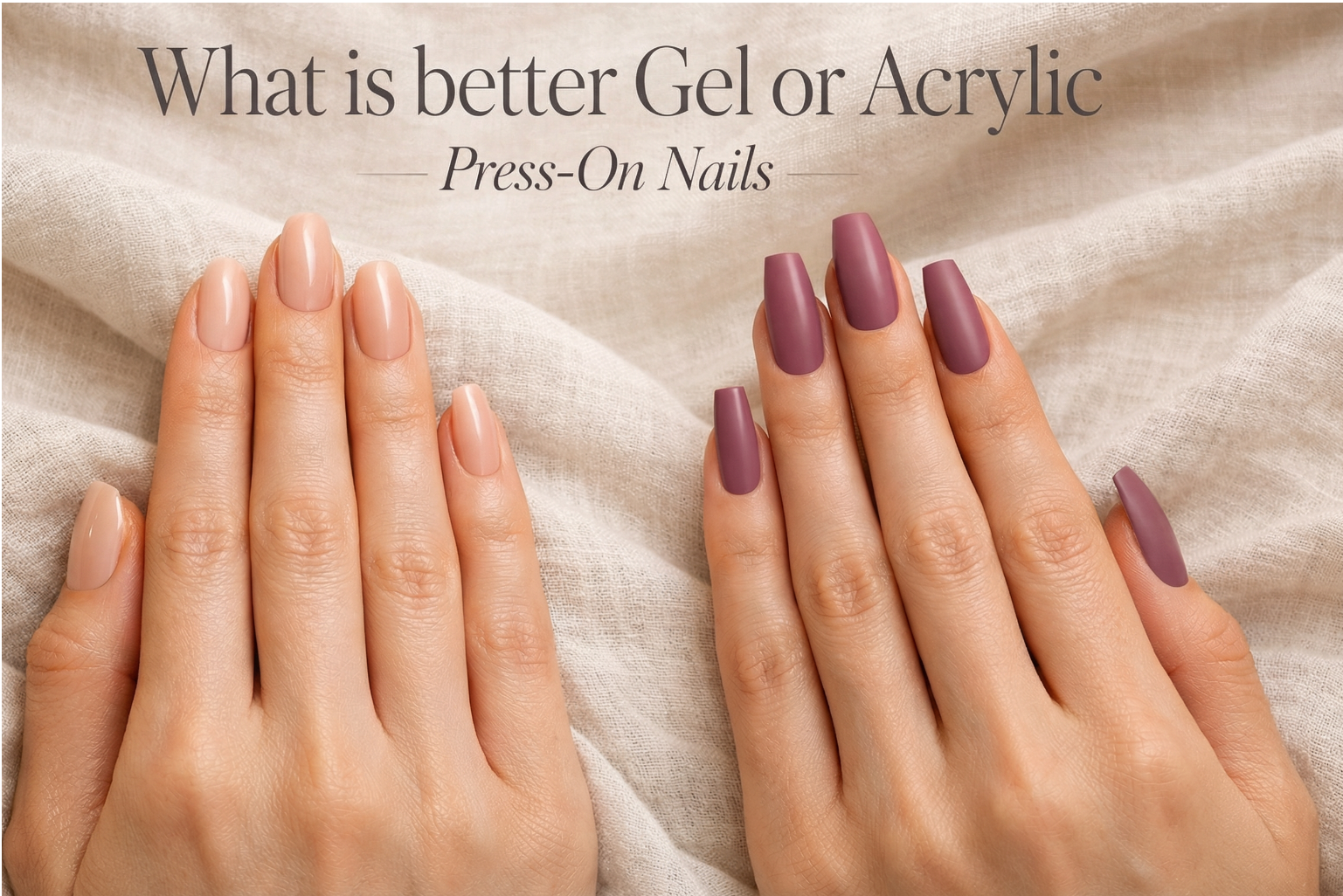
- Gel press-ons = flexible + lighter + more “your nails but better.”
- Acrylic press-ons = firmer + more structured + better for crisp shapes and drama.
If you’re currently trying to break up with long salon appointments, press-ons, especially higher-quality ones, can be the easiest upgrade you make this year.
Gel vs acrylic press-on nails: at-a-glance comparison
| What you care about | Gel press-on nails | Acrylic press-on nails |
|---|---|---|
| Overall feel | Softer, more flexible | Harder, more rigid |
| “Natural” look | Often more believable up close | Can look more structured/thicker |
| Comfort on thin nails | Usually more forgiving | Can feel tighter or heavier |
| Best lengths | Short–medium (long can work, but flex matters) | Medium–long, especially dramatic shapes |
| Durability style | Resists cracking; may bend under force | Holds shape strongly; can crack if hit hard |
| Reusability | Often easier to reuse if removed gently | Reusable too, but may be less forgiving if stressed |
| Best for | Everyday wear, comfort, “clean” manicures | Bold looks, sharp shapes, maximum structure |
If you’re not sure where to start, many readers do best with gel press-ons as their “everyday set,” then keep an acrylic set for occasions when they want extra structure and impact.
Gel press-on nails: best for a natural, comfortable feel
Gel press-ons are popular for a reason: they tend to mimic the feel of a real nail enhancement without the “helmet” vibe. Because the material has a bit of flex, gel press-ons often sit more comfortably against the nail plate, especially if your natural nails are thin, bendy, or prone to peeling.
They can also look especially convincing in daylight or on camera. The edges often appear a touch more seamless, and the overall profile can feel less bulky. If you’re someone who types all day, wears contacts, or just hates that “clacky” feeling, gel press-ons are usually the safer bet.
The potential downside of gel press-ons is also tied to their flexibility, as a softer nail may flex at the free edge if you choose an extra-long length or are rough on your hands, which can encourage lifting if your prep or adhesive isn’t dialed in.
Consider trying gel press-ons first if you want a set that feels comfortable from hour one and looks polished without announcing itself from across the room.
Acrylic press-on nails: best for structure and bold shapes
If you love the crisp look of a strong apex, sharp edges, or statement shapes, acrylic press-ons shine because they hold their architecture. The rigidity can make the manicure feel “locked in,” especially when you want longer lengths that don’t flex much.
That structure can also be reassuring if you use your hands a lot, because the nail is less likely to bend when you bump it. However, rigidity has a tradeoff: when a hard nail meets a hard impact, it may crack rather than flex. And if your natural nails are very flat, very curved, or sensitive, a rigid press-on can feel slightly less forgiving until you find a set that matches your nail shape.
You might explore acrylic press-ons if you want a bolder silhouette, you prefer a firmer feel, or you consistently find flexible press-ons lifting at the tips.
How to choose: the factors that matter more than the label
Material matters, but fit, adhesive, and prep decide whether your press-ons feel “salon” or “stress.”
Fit is everything. A perfectly fitted acrylic press-on will look more natural than a poorly fitted gel one. Look for a nail that covers sidewall to sidewall without pressing into skin, and that sits close to the cuticle line without touching it. If you’re between sizes, sizing down and gently filing the edges often looks cleaner than forcing a bigger nail to fit.
Your adhesive choice changes the entire experience. Two people can wear the same set and have totally different results based on what they attach it with:
- Nail glue is best when you want longer wear and a sturdier hold.
- Adhesive tabs are ideal for shorter wear, easy removal, and maximizing reusability.
- “Gel” adhesives that cure under a lamp can create strong hold, but they add extra steps and aren’t necessary for most people who simply want great press-ons.
If you want press-ons for low-commitment situations, such as weekend plans, a wedding, or a vacation, tabs are a great entry point. If you want them to behave more like a real manicure, glue is usually the move.
Prep is the quiet difference between 3 days and 10+ days. Most “press-ons don’t last” complaints come down to leftover oil on the nail plate, cuticle skin not being pushed back, or choosing a size that’s slightly too big. Don’t miss this: if you skip prep, you may end up blaming the nail material when the real culprit is a slippery base.
If you’re investing in nicer press-ons, it’s worth giving them the foundation they need, because ignoring prep is one of those small mistakes that can cost you the whole set.
How to make press-on nails last and remove them safely
Long-lasting press-ons aren’t about using more glue; instead, they’re about using the right amount in the right place and letting it bond properly.
Start with clean, dry nails. Push back cuticles gently, then lightly buff the surface just enough to remove shine. Wipe with alcohol to remove dust and oils, and make sure your hands are fully dry.
When you apply, aim for a controlled, even seal. Place adhesive so it covers the center of the nail plate, then press the press-on down from cuticle area toward the tip to reduce air pockets. Hold firm for a bit longer than you think you need. Most lifting starts simply because the bond wasn’t given enough time to set.
Afterward, treat the first hour like “dry time.” Avoid hot water, long showers, and heavy chores right away. This one habit alone can dramatically improve wear.
Removal is where nail health is won or lost. Never rip or pop them off. Instead, soak. Add cuticle oil around the edges and gently slide a wooden stick under areas that are already lifting, but do not force it If it doesn’t want to move, soak longer. Your natural nails will thank you.
If you’ve had peeling in the past, consider alternating: wear a set, take a short break, oil your nails for a day or two, then apply again. That rhythm keeps many people’s nails happier long-term.
Which is better for you?
If your goal is everyday, believable, comfortable nails, gel press-ons are often the better first pick, especially in short to medium lengths. They suit people who want an elevated look without the stiffness of a harder tip.
If you want longer length, sharp shapes, and maximum structure, acrylic press-ons tend to perform better. They’re a smart choice when you want your nails to keep their silhouette and feel more “locked in.”
If you’re focused on reusability, lean toward whichever set fits best and pair it with adhesive tabs or a glue method you can remove cleanly. Many people are surprised by how reusable press-ons become once they stop prying them off.
If your nails are thin, sensitive, or peeling, gel press-ons usually feel gentler day-to-day, as long as you prioritize careful removal and regular cuticle oil. And if you’re buying your first set, consider starting with a shorter length no matter the material; it’s the fastest way to get a “wow” result with fewer pop-offs.
Mistakes that cause lifting and popping
Most press-on failures are fixable. The biggest issues tend to be simple:
- Choosing nails that are slightly too small or too large
- Letting glue or adhesive touch the cuticle area
- Skipping nail prep or applying over lotion/oil residue
- Using too much glue
- Getting nails wet right after application
If you’ve tried press-ons before and felt disappointed, don’t assume you “can’t wear them.” For many people, one better-fitting set plus improved prep turns press-ons into their go-to manicure.
Conclusion: gel or acrylic press-ons?
Gel press-on nails tend to be the better choice if you want a lightweight, natural-looking manicure that feels comfortable and flexible for everyday wear, while acrylic press-on nails are often better when you want more rigid structure, sharper shapes, and confident hold at longer lengths. In practice, the “best” option depends less on the label and more on fit, adhesive choice, and prep, because even premium nails won’t last on an oily, unprepped base, and even a budget set can look impressive when it’s sized well and applied carefully. Decide how long you want to wear them, how hard you are on your hands, and what look you’re going for, then choose the material that supports that goal.
If you want the easiest win, start with short-to-medium gel press-ons for a natural feel or choose structured acrylic press-ons when you’re craving a bolder, more sculpted look. Either way, a well-fitted set, the right adhesive for your lifestyle, and a patient removal routine will get you the kind of manicure that makes you glance at your hands all day in the best possible way.
When you’re ready, choose one set that matches your daily life, and give yourself one careful application. That first “this actually looks salon-level” moment is usually all it takes to make press-ons a staple.