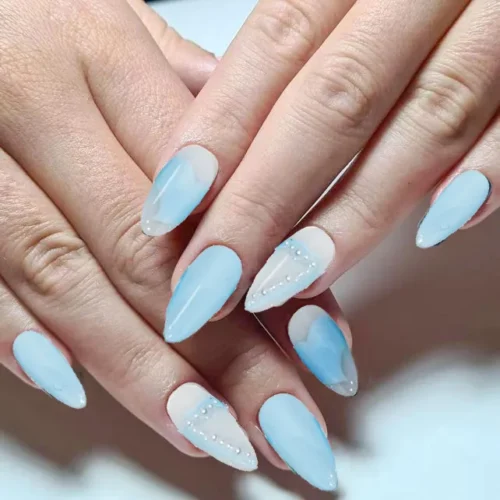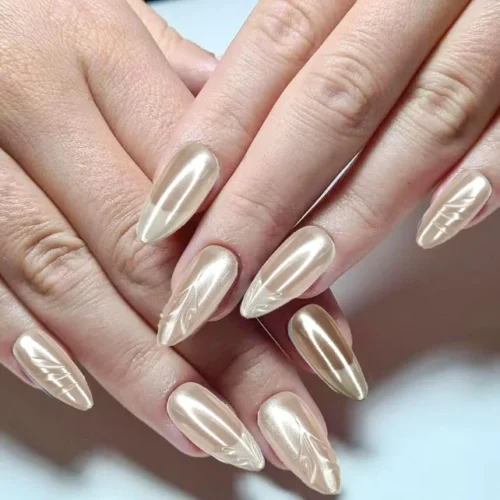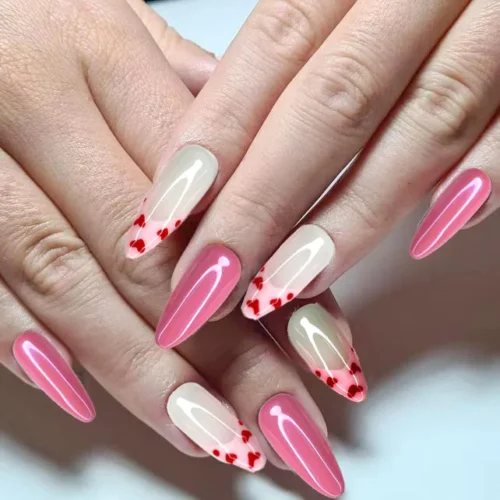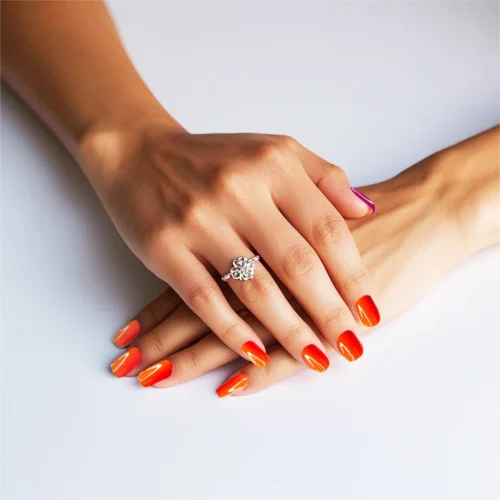

The best nail shapes for short nails are round, squoval, and oval.These shapes make nails look longer, prevent breakage, and are easy to maintain.
If your nails are very short, go for round. If you want balance, choose squoval.
For a slimming effect, oval works best.
Short nails can look chic, elongated, and intentional when you choose the best nail shape for short nails. If your nails chip the minute you type an email, if polish makes your fingers look even shorter, or if every “trend” seems designed for long tips, this guide is your shortcut to a manicure that flatters and actually lasts.
You’ll learn which nail shapes for short nails truly work, how to choose the most flattering option for your hand, and how to file each style at home without weakening your nails. Along the way, you’ll get design and care tips that create the illusion of length and help your mani survive real life. Consider keeping a photo of your bare nails handy; comparing “before and after” is a simple way to confirm what works best for you.
The quick answer: best nail shape for short nails
For most short nails, three shapes rise to the top because they both elongate the look of the fingers and hold up to daily life.
- Round: The most durable and low-maintenance; follows your fingertip’s curve and resists snagging. Perfect if your free edge is very short or your nails are prone to peeling.
- Squoval: A soft square with gently rounded corners; balances strength with a refined outline. Great for keyboard warriors who want a polished, professional look.
- Oval: Elegant and lengthening; softens wide nail beds and creates a slimmer silhouette. Best when you have at least a couple of millimeters of free edge.
Can you do almond on short nails? Yes, if you have about 3–4 mm of free edge or you’re open to a subtle short almond style. Without that minimum, the taper can weaken the tip. Classic square can look modern on narrow nail beds, but sharp corners need diligent upkeep on short lengths. Ultra-tapered shapes like coffin and stiletto rely on length and are rarely practical for truly short nails.
If you want a no-guess starting point, try squoval on your next mani. Many people find it gives an instant “put together” vibe while being easy to maintain.
How to choose the best nail shape for your hands
Think about four variables: finger proportions, nail bed width, lifestyle, and nail strength. A shape that complements all four will feel and look effortless.
Finger proportions and nail bed width
Short or wider fingers benefit from vertical lines and soft curves that visually stretch the silhouette. Oval and short almond create that gentle lengthening effect. If your nail beds are wide, a rounded or oval tip narrows the look; a blunt square can overemphasize width. Conversely, if your fingers are long and slim with narrow nail beds, a soft square or squoval adds balanced width and looks intentionally minimalist.
A quick test: with bare nails, extend your hand palm-down under neutral light. If your fingertip appears wider than your nail’s free edge, choose round or oval. If your free edge is as wide or wider than the fingertip, squoval or soft square will look tidy and balanced.
Lifestyle and daily tasks
If you type all day, cook often, change diapers, or climb at the gym, corners catch and tips take hits. Round and squoval disperse stress and are less prone to micro-cracks. If your days are gentler on your hands or you wear gloves for chores, oval or short almond can be a flattering step up in elegance.
Nail strength and current length
Measure your free edge. With less than 1 mm, choose round. With 1–2 mm, squoval looks crisp without inviting snags. With 2–3 mm, oval becomes feasible and lengthening. At 3–4 mm, a short almond can work if you file conservatively and reinforce with a good base coat.
If your nails are thin or peeling, prioritize strength first. A shape won’t hold if the canvas is weak. A few weeks of daily cuticle oil and a strengthening base can transform shaping results. If you’re shopping, consider a glass/crystal file and a 180/240-grit emery for precise, gentle filing.
How to shape short nails at home without thinning them
You only need two files (180 and 240 grit), a buffer, and patience. Always file dry nails, move in one direction, and check symmetry by viewing your fingertips from multiple angles.
Round: the effortless classic
Trim just above the fingertip line, then place your file at a slight angle under the free edge. File from each side toward the center in curved, single-direction strokes, mirroring your fingertip’s natural arc. Keep the curve soft without points. Finish with the 240-grit file to refine, then lightly buff the underside so nothing catches. If you’re accident-prone, this is your reliable, easy-care shape.
Squoval: balanced and professional
First, establish a straight free edge with your file held perpendicular to the nail. Once the line is clean, soften only the corners in two or three gentle, arcing passes. Your goal is a straight top with corners that won’t snag. View from the client’s angle (turn your hand around) to check that both corners match. Cap the free edge with top coat to add strength where short nails need it most.
Oval: instantly elongating
Create a soft taper by filing each sidewall slightly inward, then round the tip into an egg-like curve. The widest point should sit just above the cuticle line so the eye travels upward. Take off a little at a time, alternating sides to maintain symmetry. If a nail starts feeling thin at the tip, stop, because oval looks best when it’s smooth, not sharp.
Short almond: refined on small lengths
Mark the center of the tip mentally. Starting from one corner, file diagonally toward that center point in long, single-direction passes. Repeat on the opposite side, keeping the taper subtle. Round the tip to avoid a needle point; on short nails, too-sharp looks more “breakage risk” than “editorial.” If your nails chip easily, consider two coats of a rubberized or strengthening base before color.
Soft square: modern minimal
File straight across with steady, even pressure, then barely round the corners so they don’t lift fabric. Keep this shape truly short because long square nails on thin nails are prone to cracks. This is the canvas for crisp micro-French and minimalist nail art.
Not sure which to commit to? Shape one hand round and the other squoval for a week. Notice which grows out neater, chips less, and looks better in your mirror selfies. Most readers land on squoval for daily life and oval for special occasions.
Design tricks that make short nails look longer
Color and placement are your secret weapons. Semi-sheer nudes that are close to your skin tone visually extend the nail bed. A micro-French with a very thin, slightly curved smile line draws the eye upward; keep the tip narrow on the sides to avoid “widening.”
Vertical or diagonal accents elongate, while heavy horizontal stripes or thick French tips can visually shorten. Centered motifs such as a slim vertical line, a petite gem, or a negative-space window draw attention to the middle and add length. Keep sidewalls free of polish to create a narrower silhouette; wiping a clean brush dipped in remover down each side before curing or drying sharpens the look instantly.
Longevity habits for short nails that actually work
Short nails are strong by design, but the right habits make them nearly indestructible. Apply cuticle oil daily; flexible nails bend instead of snapping. Use a high-adhesion base coat and wrap the free edge with every layer of polish. Top up the top coat on day three to reseal the edge.
File, don’t clip, when maintaining shape midweek. Keep a gentle 240-grit file at your desk for two quick passes if a corner feels rough. Wear gloves for cleaning and dishwashing; water exposure and detergents are silent mani killers. If a micro-tear appears, a small patch with a silk or tea-bag wrap under clear base can buy you a week until your next full reshape.
Many readers choose a weekly rhythm: shape and polish on Sunday, quick oil-and-top-coat refresh on Wednesday, and a polish break every third week with just oil and a clear strengthener to reset.
Common mistakes with Short Nail Shapes
Over-filing thins the tip and invites peeling. If you hear a rough rasping sound, switch to a finer grit or lighten your pressure. Filing back and forth can separate the keratin layers, so always file in one direction. Shaping when nails are wet makes splits more likely; wait at least 30 minutes after a shower.
Square corners that are truly sharp will catch on denim, bedding, and sweaters. Round them one or two degrees more than you think you need. Another silent culprit: letting polish pool at the sidewalls. Clean margins are slimming; a flooded sidewall makes even a perfect shape look squat.
If your nails chip within 24 hours, reassess prep. A quick swipe of dehydrator or rubbing alcohol, plus a thin base layer, dramatically improves wear. Consider investing in a glass file; it seals the edge more smoothly and helps prevent fraying.
At-home vs. salon shaping for short nails
Short nails are uniquely friendly to DIY because you’re removing less keratin and dealing with fewer structural variables. If you want a significant shape change, such as moving from soft square to short almond, or your nails are peeling and thin, a professional can set your baseline shape cleanly and advise on strengthening overlays if needed.
When you book, be specific: “short almond, soft without pointy, with reinforced apex” or “squoval, corners rounded enough not to snag.” Ask your tech to minimize aggressive drilling if you opt for gel or builder; controlled e-filing and hand-filing preserve strength so your chosen shape holds between fills. If your salon offers it, a gentle dry manicure that tidies cuticles without cutting can make short shapes look especially crisp.
Troubleshooting: if your nails are very short or bitten
If the free edge is barely visible or the nail bed is shortened from biting, start with an ultra-short round and focus on health for two to four weeks. Daily oil, a hydrating hand cream after washing, and a ridge-filling, sheer nude polish can create a clean look while the nail bed recovers. As the free edge appears, move to squoval for a tidier outline. Resist the urge to force a taper too soon; thin tips break and set you back.
You might try a clear bitter-tasting top coat while you build the habit, or keep a small fidget tool within reach. Replacing biting with a different motion is often the difference-maker.
A one-minute shape finder
- If you want the lowest maintenance and strongest edge: round.
- If you type a lot and want polished-but-practical: squoval.
- If you want a slimming, elegant effect and have 2–3 mm of free edge: oval.
- If you love a refined taper and have 3–4 mm of free edge: short almond.
- If your nail beds are narrow and you crave minimalism: soft square—with softened corners.
Consider trying your top two over the next two manis. A simple A/B test beats guesswork.
Summary
Short nails look their best when the shape adds visual length without sacrificing strength. Round, squoval, and oval are the most reliable choices: round for maximum durability, squoval for a crisp yet snag-free outline, and oval for a graceful, elongating finish once you have a bit of length. Match the shape to your finger proportions, nail bed width, lifestyle, and current nail strength; file in one direction with gentle grits; and use color placement to create vertical lines and clean sidewalls. With daily oil, edge-capping, and midweek touch-ups, your chosen shape will stay sharp and chip-resistant. Start with squoval or round, then explore oval or short almond as your free edge grows. Your best shape is the one you can keep looking fresh with minimal effort.