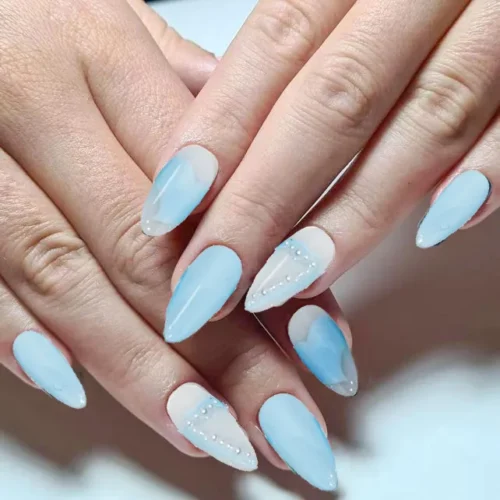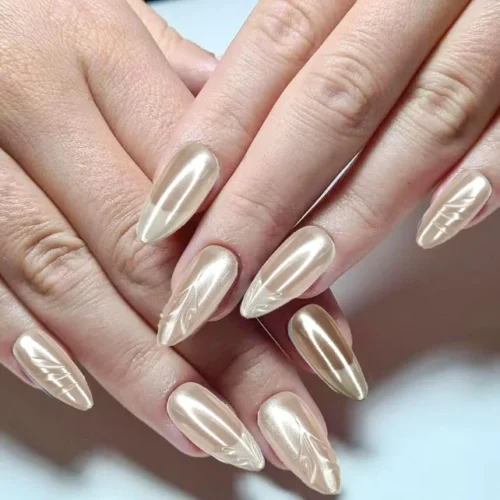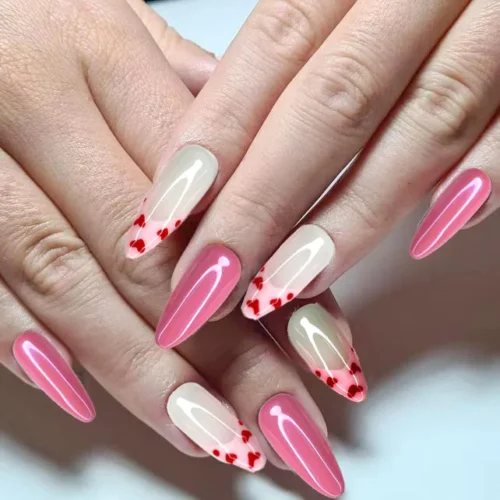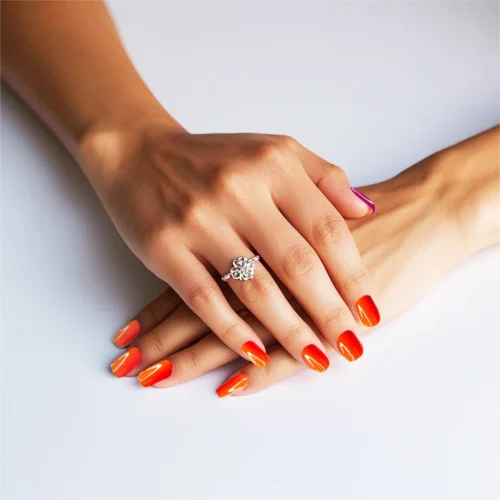
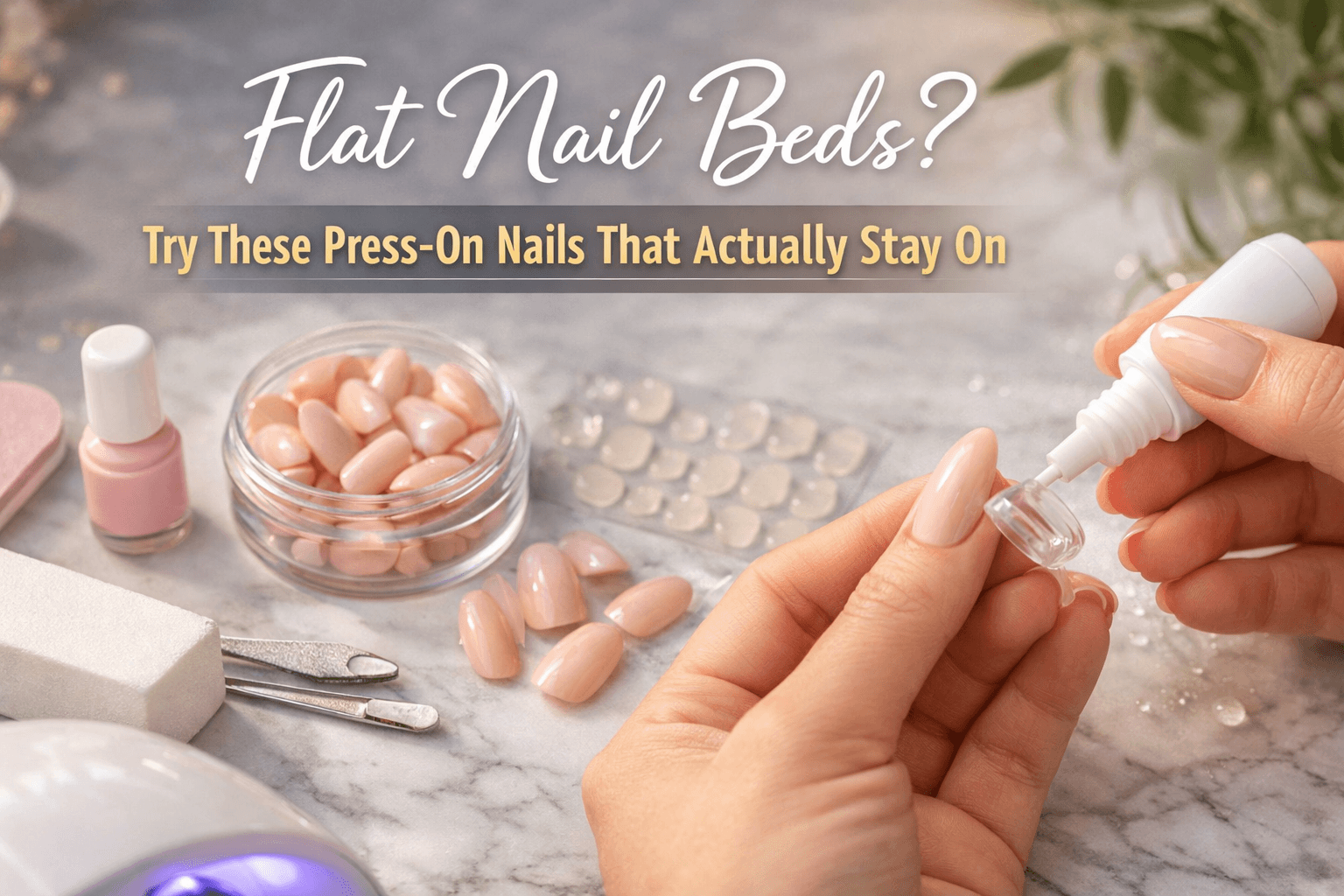
If your press-ons keep lifting at the sides or popping off in the shower or catching your hair your nail beds instead of your technique are likely the culprit. Flat nail beds don’t have the curved “C‑curve” that most press-ons are built around, so standard tips sit like a bridge over a gap. Adhesive can’t fully contact the nail, water sneaks in, and the manicure fails early.
The good news is that with choosing the right press-on nails for flat nail beds and a smarter application method, flat nail beds can hold a gorgeous, natural-looking mani for 10–21 days. This guide shows you exactly what to shop for, how to prep, and proven hacks that make flat nail beds a non-issue. Along the way, you’ll find small, practical tips to help you get salon results at home.
What are the best press-on nails for flat nail beds
The best press-on nails for flat nail beds are soft gel nails with a flatter C-curve flexible structure and a tapered cuticle edge. These designs fit snugly without gaps reducing lifting and helping nails last 10 to 21 days with proper application.
Why flat nail beds need a different approach
Think of a press-on like a contact lens. If the curve doesn’t match, it won’t sit flush. On flat nail beds, a highly curved tip leaves a hollow space under the center or along the sides. That gap becomes a weak point: glue can’t grip evenly, air bubbles stay trapped, and everyday pressure (typing, hair washing, opening cans) creates leverage that lifts the edges.
Flat nail beds also tend to be slightly wider from sidewall to sidewall. If the press-on is too narrow, it squeezes your nail plate and springs upward. If it overlaps the skin, it can’t seal. The “best press-on nails for flat nail beds” are those designed to reduce the curve, flex to your nail, and seal the edges so no gap remains.
Consider this section your lightbulb moment: once the fit is solved, everything else becomes easier.
How to choose the best press-on nails for flat nail beds
Finding a set that behaves like it was made for your nails is simpler when you know the cues to watch for. Prioritize these features:
- Flatter C-curve with flexible material. Look for “soft gel,” “semi-flex,” or “natural C‑curve” descriptions. These materials have a gentle arch and a bit of bend so they hug a flatter bed instead of fighting it.
- Tapered cuticle edge. A thinner, feathered cuticle area sits flush without flooding glue into your skin and helps create a clean, salon look.
- Pre-etched or matte underside. A slightly textured interior grips adhesive better. If the underside is glossy, you can lightly buff it yourself (more on that below).
- Wide size range and clear sizing. Sets with 12–15 sizes (or “wide fit” options) accommodate broader or flatter thumbs and index fingers. If you’re between sizes, choose the larger tip and file the sidewalls to fit; a too‑small tip will lift.
- Short-to-medium lengths with balanced structure. For flat nail beds, a little thickness at the apex and free edge (without bulk at the cuticle) prevents bending and early cracks.
- Adhesion that fills micro-gaps. Brush-on nail glue with medium viscosity or a gel-type adhesive that “cushions” between the nail and tip will seal better than thin, watery formulas. If you plan on 2+ weeks of wear, a builder-gel method can be a game-changer.
Best shapes and lengths for flat nail beds
Shape and length aren’t just style, but they influence physics. Choose options that reduce leverage and encourage a flush seal.
Oval and almond for stress relief
Oval and almond distribute pressure along the sides and reduce snag points, so they’re friendlier to flat nail beds than crisp square or coffin shapes. If you love a square silhouette, try “soft square” with rounded corners to minimize catching.
Short to medium for a stronger bond
The longer the nail, the more leverage on the adhesive. Start with short or medium lengths while you perfect your application, then gradually size up. Many readers find they can wear longer shapes once their fit and prep are dialed in.
Visual lengthening tricks
Flat or wide nail beds often look instantly longer with:
- Neutral or sheer bases that match your skin tone.
- Slim French tips or vertical line art that draw the eye inward.
- A subtle, glossy top coat to enhance a “natural nail” illusion.
If you’re undecided, consider trying short almond in a neutral shade first, because it’s forgiving, elegant, and universally flattering.
How to apply press-on nails on flat nail beds
Here’s a streamlined routine that combines pro techniques with home-friendly hacks. Set aside 25–40 minutes the first time; you’ll move faster with practice.
- Size and test-fit when your hands are warm and dry
Lay out all ten nails before you touch glue. The correct size should sit sidewall-to-sidewall without pressing into skin. If you’re between sizes, choose the larger tip and lightly file the sidewalls. Write the sizes down for future sets, so you’ll save time every application. - Clean, dehydrate, and lightly etch
Wash hands, then wipe each natural nail with alcohol or a prep solution to remove oils. Gently push back cuticles. Lightly buff your nail plate with a fine buffer to create micro-grip; avoid over-buffing. If your nails run oily, a quick swipe of dehydrator or a tiny amount of acetone helps. - Prep the press-ons’ underside
If the interior looks shiny, lightly buff just the area that will contact your nail. This step alone can add days of wear. Dust off thoroughly. - Use the warm-water flattening hack
If a tip still arches too much dip it not your natural nail in hot not boiling water for 15–30 seconds then gently press the sidewalls to relax the curve. Test on one nail first. This tiny adjustment can eliminate the center gap that causes lifting. - Choose your adhesion method
- Glue sandwich (quick, reliable): Apply a thin coat of brush-on glue to your natural nail and a thin coat to the underside of the press-on. For very flat beds, you can place a small adhesive tab on your nail as a “spacer,” then add a veil of glue over the tab before applying the tip. This fills micro-gaps and reduces bubbles.
- Builder-gel method (max hold): Apply a thin bonding base coat to your natural nail, then a very thin layer of builder gel and cure per product directions. Add a whisper of builder gel inside the press-on, seat it onto the nail at a 45-degree angle, and flash-cure while holding pressure. Fully cure once it’s aligned. This works best with translucent or lighter-colored tips so light can reach the gel. If your tips are opaque, stick to glue.
Safety note: Work in a ventilated space and avoid getting adhesive on skin. If you have known sensitivities, patch-test first.
- Seat the tip at a 45-degree angle and hold
Slide the press-on up to but not on top of the cuticle then roll it down while pushing air out toward the free edge. Hold firm, even pressure for 30–60 seconds. Pinch the sidewalls gently to lock the edges. Apply to your dominant hand last for better control. - Let everything set
Avoid water steam oil or lotions for at least an hour longer is better. After 20–30 minutes, lightly file the free edge to your exact shape and, if you like, add a thin top coat and cap the tips for extra chip resistance.
Keep a tiny “rescue kit” nearby including alcohol wipes and a fine file and brush-on glue so you can fix a lift the moment you spot it.
Troubleshooting common issues on flat nail beds
- Corner lifting within 24 hours: You likely under-sized or under-buffed. Wick a small amount of glue under the lifted edge with a toothpick, press for 30–60 seconds, and file the perimeter smooth once set. Next time, go one size up and file to fit.
- Center “bubble” you can feel when pressing: The tip’s curve still exceeds your nail’s. Flatten the next nail in warm water before application or switch to a softer, flatter style.
- Flooded cuticles: You used too much adhesive or seated the tip too close to the skin. Leave a hairline gap at the cuticle and use thinner coats of glue.
- Nails bending or cracking: The tips are too thin for your lifestyle or too long for your current adhesion method. Shorten slightly or choose a sturdier, soft-gel style with a reinforced apex.
How to make press-on nails last longer on flat nails
If you want to make press-on nails last longer on flat nails, your daily habits quietly determine wear time. Adopt these simple rules:
- Protect from prolonged soaking. Long baths, hot tubs, and dishwashing right after application are adhesive killers. Wear gloves for chores and wait 12–24 hours post-application before heavy water exposure.
- Be “edge aware.” Use your knuckles, not your nails, to pry or open things. Avoid picking at stickers or labels with your tips.
- Refresh the seal. Every 2–3 days, add a thin top coat and cap the free edge. This slows micro-lifting.
- Oil with intention. Apply cuticle oil around but not under the edges to keep the perimeter supple without undermining the adhesive.
- Carry a mini fix kit. A quick clean with an alcohol wipe and a dot of glue can prevent a small lift from becoming a full pop-off.
You don’t have to be precious, just strategic. Many people see their wear time double by changing nothing but water exposure the first 24 hours.
How to removal and reuse press-on nails safely
Never rip press-ons off. That’s how layers of your natural nail come with them.
- Soak and slide. In a bowl of warm, soapy water with a few drops of oil, soak for 10–15 minutes. Gently work a wooden stick around the edges. If you feel resistance, soak a little longer.
- Clean the tips. Peel residual glue from the underside, wash, and let them dry fully. Lightly refine any rough edges with a fine file. Store by size in a labeled container.
- Give nails a breather. Take 1–2 days between sets to apply cuticle oil and a strengthening base coat if needed.
How to buy press-on nails that fit flat nail beds
Buying sight-unseen feels risky, but a quick checklist stacks the odds in your favor.
- Scan for keywords like “soft gel,” “natural/flat C‑curve,” “tapered cuticle,” and “pre-etched underside.”
- Check the size chart and width in millimeters. Measure your nails at the widest point; aim for a tip that matches or is up to 0.5 mm wider (you can file down). If your thumbs are wide, confirm the largest size included.
- Look at interior photos. A deep tunnel shape usually equals trouble on flat beds. A gentler arch or visibly flexible material is a green light.
- Start with short or medium lengths. Once you’ve confirmed fit and adhesion, branch into longer styles.
- Invest in your adhesive. A quality brush-on glue or builder-gel system often matters more than the price of the tips themselves.
You might try ordering one test set first. If the fit is perfect grab a couple of styles in the same shape and length so future applications become nearly automatic.
Summary: the flat-nail
The best press-on nails for flat nail beds combine a flatter C‑curve, flexible soft-gel material, a tapered cuticle edge, and a generous size range so each tip sits sidewall-to-sidewall without pressure. Prep is everything because you must cleanse and dehydrate and lightly etch both the natural nail and the tip’s underside and if needed use the warm-water hack to relax excess curve. Choose either a glue-sandwich application for reliable weeklong wear, or a builder-gel method for 2–3 weeks when your tips let light through. Seat each nail at a 45‑degree angle, press and hold 30–60 seconds, then protect the set from water and oils for the first day. Maintain with mindful habits, fix small lifts immediately, and remove with a warm soapy-oil soak to keep both your nails and your press-ons in great shape.
FAQ: Flat nail beds and press-on nails
How long can press-ons last on flat nails?
With good prep and brush-on glue, 7–14 days is common. Using a builder-gel method, many people reach 2–3 weeks, especially with short to medium lengths.
Are adhesive tabs useless on flat nails?
Not at all. Alone, they’re short-wear. But as a “spacer” under a thin veil of glue, tabs can help fill micro-gaps on very flat beds and reduce bubbles.
Can I wear long coffin or square shapes?
Yes, but treat them as an advanced option. Master fit and adhesion with short almond or oval first, then size up. For long shapes, choose sturdier tips and reinforce with top coat every few days.
What if my natural nails are very short or peeling?
Press-ons can still work. Keep length conservative, prep gently (don’t over-buff), and use a dehydrator or bonding base to improve adhesion. Consider a rest week after removal to nourish and fortify nails.
What if my natural nails are very short or peeling?
Press-ons can still work. Keep length conservative, prep gently (don’t over-buff), and use a dehydrator or bonding base to improve adhesion. Consider a rest week after removal to nourish and fortify nails.
Is the builder-gel method safe at home?
Used as directed, yes. Only cure gels designed for nail use, avoid skin contact, and ensure your tips allow light to pass through for proper curing. If your tips are opaque, stick with glue.